


Event merchandise can do more than give attendees something to take home. Well-planned event apparel can help identify staff, build brand recognition, create a sense of community, and provide useful promotional merchandise throughout a conference or festival.
Planning an Event T Shirt Bulk Order requires more than estimating the number of people attending. Organizers also need to consider shirt styles, sizes, artwork, printing methods, production timelines, delivery requirements, and how the merchandise will be distributed.
Whether you’re organizing a conference, festival, fundraiser, corporate gathering, or community event, careful planning can help you get the right apparel to the right people without creating unnecessary leftover inventory.
What Is an Event T Shirt Bulk Order and When Do You Need One?
An Event T Shirt Bulk Order is a larger apparel order prepared for a specific event, organization, campaign, or gathering. Conferences, festivals, fundraisers, corporate events, school programs, and community events are common examples.
Bulk ordering can make sense when attendance is relatively predictable and shirts need to be distributed to many people at once. It can also simplify event-day logistics because organizers can receive the apparel in one production run rather than managing many smaller orders.
Before placing an order, establish the basic requirements:
- Event date and delivery deadline
- Expected attendee count
- Staff and volunteer requirements
- Shirt styles, colors, and sizes
- Artwork and branding
- Decoration method
- Distribution requirements
- Budget and available storage
These details provide the foundation for the rest of the planning process.
Common Events That Use Bulk T-Shirt Orders
Bulk event apparel can work for a wide range of occasions, including:
- Conferences and conventions
- Music and community festivals
- Corporate events
- Fundraisers and nonprofit events
- School and university events
- Sporting events
- Trade shows
- Community and volunteer programs
The purpose of the shirts can vary. Some are given to every attendee, while others are reserved for staff, volunteers, speakers, sponsors, or merchandise sales.
What Should You Decide Before Ordering?
Start by determining what role the shirts will play. Staff apparel may need to prioritize visibility and durability, while attendee merchandise may focus more heavily on design and brand appeal.
It’s also useful to establish the delivery date early. Working backward from the event gives you time for artwork approval, production, shipping, inspection, and unexpected delays.
How to Plan the Right Quantity for an Event T Shirt Bulk Order
The right quantity for an Event T Shirt Bulk Order depends on more than your expected attendee count. Consider staff, volunteers, speakers, performers, sponsors, merchandise sales, and a reasonable buffer.
If registration is open, use confirmed registrations as part of the calculation. For recurring events, previous attendance and merchandise data can also provide useful guidance.
Avoid automatically ordering one shirt for every expected attendee. Some people may not need a shirt, while staff and volunteers may require additional apparel.
A Simple Quantity Planning Formula
A practical starting point is:
Confirmed attendees + staff and volunteers + expected additional demand + reasonable buffer = target quantity
The appropriate buffer depends on the event. A registration-based conference with controlled attendance may have more predictable demand than a public festival with walk-in visitors.
Avoid adding a large arbitrary buffer simply because the shirts are being purchased in bulk. Excess event-specific merchandise can become difficult to use after the event.
How to Build a Practical Size Mix
Don’t treat sizing as an afterthought. A large order with the wrong size distribution can leave you with shortages in some sizes and excess inventory in others.
Use previous event data whenever possible. If this is your first event, review registration information and the audience you expect to attend rather than relying on a generic size breakdown.
It’s also helpful to separate staff apparel from attendee merchandise. Staff may require different sizes, shirt styles, colors, or quantities depending on their roles.
Should You Order Extra Event Shirts?
Some extras are useful. They can cover last-minute attendees, staff changes, damaged garments, or unexpected demand.
The key is to make the buffer reasonable. If the design is highly specific to a single event, large quantities of leftovers may have limited value. If the design is part of an ongoing brand or merchandise line, unused shirts may be easier to sell or distribute later.

Choosing Shirts and Printing Methods for an Event T Shirt Bulk Order
Once you know the quantity, consider what you’re actually putting on those shirts.
Garment choice affects comfort, appearance, durability, and overall event experience. A lightweight shirt may work well for an outdoor summer festival, while a heavier or premium garment may be more appropriate for a corporate conference or branded merchandise collection.
The artwork matters, too. Event designs should be recognizable without becoming overcrowded with logos, dates, sponsor names, and other information.
Screen Printing for Large Event Apparel Runs
Screen printing can be a practical option for many larger apparel orders, particularly when the artwork and garment requirements are consistent across a large quantity.
When planning screen printing services, consider the number of print colors, print locations, garment color, artwork complexity, and total quantity. These factors can affect production requirements and the final cost.
For a conference, for example, you might use a prominent front design with a smaller event or sponsor mark on the back. A festival may use a more visually detailed design intended to function as merchandise as well as event identification.
Embroidery, Patches, and Other Decoration Options
Not every piece of event merchandise needs to be a printed T-shirt.
Embroidery can be appropriate for staff polos, jackets, hats, and other apparel that needs a more structured branded appearance. Custom embroidery services can be considered when the merchandise will be used beyond a single event.
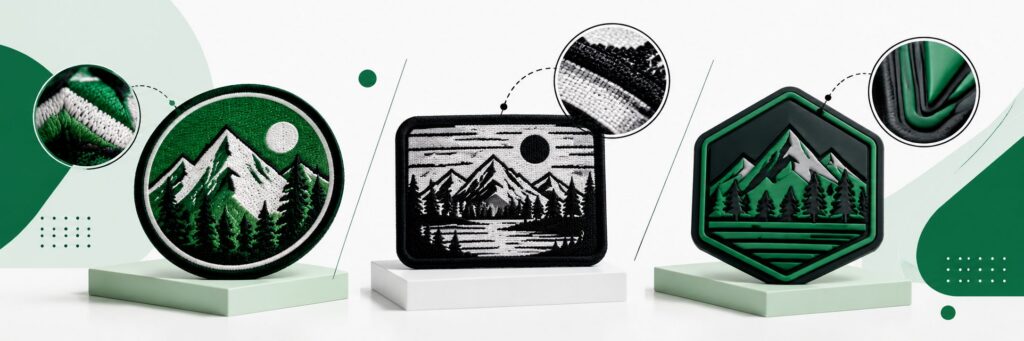
Patches are another option for hats, jackets, bags, and other merchandise. premium patches online can provide a different visual style from traditional printed apparel, particularly when you’re creating a broader event merchandise collection.
Expand the Event Merch Beyond T-Shirts
A successful event merchandise strategy doesn’t have to stop with shirts.
Stickers can be inexpensive additions to attendee bags, registration packages, or promotional giveaways. custom sticker printing services can help extend event branding to laptops, water bottles, notebooks, and other surfaces.
You can also consider custom printed promo products such as bags, drinkware, notebooks, or other branded items depending on the event and audience.
The goal isn’t to order as many products as possible. Instead, choose merchandise that supports the purpose of the event and is practical for attendees.
How to Manage Production and Delivery for an Event T Shirt Bulk Order
Timing becomes especially important when an entire event depends on one shipment of apparel.
For an Event T Shirt Bulk Order, start with the date the merchandise needs to be in your hands rather than simply asking when production can begin. Then work backward to establish deadlines for artwork, proof approval, production, shipping, and inspection.
Build an Event Apparel Timeline
A simple timeline might look like this:
- Confirm event requirements.
- Estimate quantities and sizes.
- Select garments and decoration methods.
- Finalize artwork and sponsor logos.
- Review and approve the proof.
- Place the bulk order.
- Allow time for production.
- Allow time for shipping.
- Inspect and organize the shipment.
- Prepare the merchandise for event-day distribution.
The earlier these steps are established, the less pressure there is when the event date approaches.
When working with a provider, bulk printing services can be useful for organizations that need larger quantities produced as one coordinated order.
What to Confirm With a Bulk Printing Provider
Before approving an order, confirm:
- Minimum order requirements
- Available shirt styles and sizes
- Available colors
- Decoration locations
- Artwork requirements
- Proofing process
- Production timeline
- Shipping options
- Reorder possibilities
- Packaging or sorting requirements
Also confirm who is responsible for artwork approval and whether changes after approval could affect the production schedule.

How to Avoid Common Last-Minute Problems
Several avoidable issues can create problems close to an event.
Incorrect artwork, incomplete sponsor approvals, inaccurate size counts, insufficient production time, and shipping delays can all affect delivery.
A simple final review can catch many of these issues. Confirm the artwork, quantity, sizes, garment colors, decoration locations, delivery address, and required date before production begins.
How to Make an Event Merch Strategy Work Beyond One Event
An event can also be an opportunity to establish a longer-term merchandise strategy.
Instead of creating a completely different approach for every event, organizations with recurring conferences or festivals can develop a recognizable merchandise line. Consistent colors, logos, garment styles, or design elements can make different event collections feel connected.
If you’re developing a larger apparel collection, the guide create a successful merch line can help with the broader planning process.
When Bulk Ordering Makes Sense
A bulk order may be practical when:
- Attendance is relatively predictable.
- A large number of people need apparel at the same time.
- The design and garment requirements are consistent.
- The merchandise is intended for a specific event.
- You have enough time for planned production and delivery.
Bulk ordering can also simplify distribution because the merchandise arrives together and can be sorted before the event.
When On-Demand Merch May Be Worth Considering
Bulk production isn’t the only approach.
On-demand merchandise can be useful when demand is difficult to predict, products need to remain available after the event, or an organization doesn’t want to maintain large quantities of inventory.
How On-Demand Merch Helps Businesses Eliminate Inventory Costs explains how this approach can reduce the need to store merchandise in advance. Who should use on-demand merch? can also help organizations determine whether an on-demand model fits their particular situation.
For a single event with predictable demand, a traditional bulk order can be easier to manage. For an ongoing merchandise program, an on-demand model may address different inventory and fulfillment needs.
Other Considerations for Organizations Ordering Event Merchandise
Event merchandise sometimes involves requirements beyond apparel selection and printing.
Organizations should consider branding, sponsor placement, staff identification, purchasing procedures, and any contractual requirements before production begins.
Branding and Sponsor Placement
If sponsors are included on event shirts, decide early how their logos will be incorporated.
Too many logos can make the design difficult to read. Consider establishing a clear hierarchy between the main event identity and supporting sponsor marks.
You may also want different artwork for attendees and staff. Staff shirts can prioritize visibility and identification, while attendee merchandise can focus more heavily on the event’s visual identity.
Apparel for Staff, Volunteers, and Event Teams
Staff and volunteers often wear their shirts for longer periods and may need to be easily identified by attendees.
Consider whether they need a different color, design, garment type, or decoration method. In some cases, embroidery or patches may make sense for apparel that will be reused at future events.
Organizations With Contract or Purchasing Requirements
Some organizations have specific vendor, purchasing, or labor-related requirements. Event organizers working under applicable union or contractual arrangements should confirm those requirements before selecting a production partner.
For organizations with relevant needs, union contract services may be worth discussing as part of the procurement process.
Event T Shirt Bulk Order Checklist
Before placing an Event T Shirt Bulk Order, review the following:
- Event date confirmed
- Delivery deadline established
- Attendee and staff quantities estimated
- Size breakdown prepared
- Shirt styles and colors selected
- Artwork finalized
- Decoration method selected
- Sponsor logos approved
- Production timeline confirmed
- Shipping details verified
- Extra quantity determined
- Final proof approved
- Distribution plan prepared
This checklist can help identify missing information before production starts.
Final Thoughts on Planning an Event T Shirt Bulk Order
A successful Event T Shirt Bulk Order starts well before the shirts go into production. The most important decisions involve quantity, sizing, garment selection, artwork, decoration, timing, and delivery.
The right approach depends on the type of event and how the merchandise will be used. A large conference with confirmed attendance may benefit from a carefully planned bulk order, while an organization building a long-term merchandise program may also want to consider on-demand fulfillment.
For organizations planning event apparel alongside stickers, patches, promotional products, or other branded merchandise, Shirt.co can be considered as part of the production planning process. The priority should always be matching the merchandise strategy to the event’s actual audience, timeline, and requirements.
Frequently Asked Questions About Event T Shirt Bulk Orders
How many shirts should I order for an event?
Start with confirmed attendees, then account for staff, volunteers, speakers, expected additional demand, and a reasonable buffer. Previous event data can also help determine a more accurate quantity and size distribution.
How far in advance should I place an Event T Shirt Bulk Order?
Start as early as practical and work backward from the date the shirts need to be available. Allow time for artwork approval, production, shipping, inspection, and potential delays.
What printing method is best for large event t-shirt orders?
There isn’t one method that works for every event. The appropriate choice depends on order quantity, artwork, garment type, number of colors, print locations, and the intended use of the shirts.
Should event staff and attendees get different shirts?
They can. Different colors, designs, or garment styles can make staff easier to identify while keeping attendee merchandise focused on the event’s branding.
Can I order other promotional products with event shirts?
Yes. Stickers, patches, bags, drinkware, notebooks, banners, and other promotional products can complement event apparel. The best combination depends on the audience, event format, and intended use.
Is bulk ordering better than on-demand merch for events?
The two approaches serve different purposes. Bulk ordering can work well when event demand is predictable and merchandise is needed at one time. On-demand merchandise can be useful when demand is uncertain or products need to remain available over a longer period.