



Ordering custom shirts for a large group can quickly become complicated when you’re trying to estimate the right size breakdown. Whether you’re coordinating apparel for employees, school events, sports teams, or promotional campaigns, using effective screen printing sizing strategies helps reduce waste, avoid shortages, and keep costs under control.
Understanding shirt sizing for large orders is especially important when ordering hundreds or even thousands of garments. Partnering with a trusted provider of screen printing services can also simplify the process by offering expert guidance on size distribution, garment selection, and production planning. In this guide, we’ll cover practical methods for planning shirt sizes accurately and confidently.
How Ignoring Shirt Size Affects Your Large Screen Printing Order
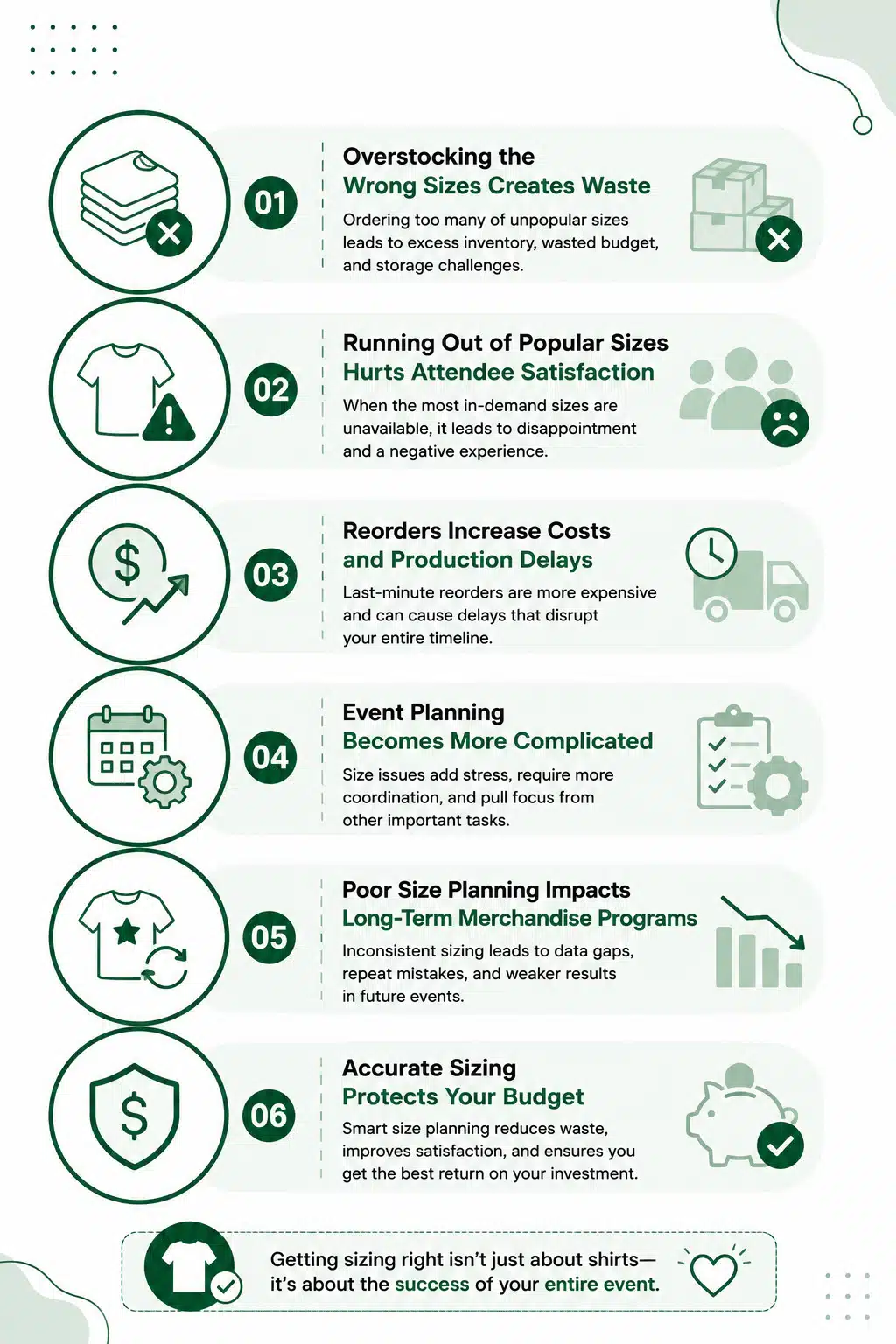
When planning a large apparel order, most organizers focus on artwork, garment quality, and printing costs. However, one of the most expensive mistakes often happens before production even begins: poor size planning. Ignoring proper shirt sizing for large orders can lead to excess inventory, dissatisfied attendees, wasted budget, and costly reorders that disrupt event timelines.
For organizations placing high-volume orders through professional bulk order programs, accurate sizing is just as important as selecting the right garment style or print method.
Overstocking the Wrong Sizes Creates Waste
One of the most common problems in large apparel orders is ordering too many shirts in sizes that don’t match actual demand.
Many event organizers assume equal demand across all sizes and place orders accordingly. In reality, shirt size distribution rarely works that way. Most groups tend to follow predictable patterns, making established shirt size ratios for bulk orders far more reliable than guesswork.
When sizing isn’t planned correctly, organizations often end up with:
- Large quantities of unused inventory
- Storage challenges
- Reduced event profitability
- Additional discounting or giveaways to clear excess stock
These leftover garments represent money that could have been allocated to other event or marketing initiatives.
Running Out of Popular Sizes Hurts Attendee Satisfaction
While excess inventory is problematic, running out of common sizes can be even more damaging.
Imagine attendees arriving at an event only to discover that their size is unavailable. This creates frustration and leaves participants feeling overlooked. Whether you’re distributing employee apparel, conference merchandise, school spirit wear, or promotional products, size shortages can negatively affect the overall experience.
This challenge becomes even more critical for brands investing in premium merchandise through professional branded apparel programs where customer perception directly impacts brand reputation.
Reorders Increase Costs and Production Delays
Incorrect sizing often leads to emergency reorders.
The problem is that small follow-up orders typically:
- Cost more per garment
- Require additional setup charges
- Create shipping expenses
- Extend production timelines
For organizations working under tight deadlines, these delays can become expensive. Many businesses eventually require rush production services to recover from avoidable sizing mistakes.
Event Planning Becomes More Complicated
Accurate ordering shirt sizes for events helps simplify logistics and improve planning accuracy.
Without proper size forecasting, organizers often face:
- Distribution challenges
- Last-minute garment swaps
- Increased administrative workload
- More customer service requests
By collecting size information early or using proven bulk-order sizing ratios, teams can streamline fulfillment and reduce operational headaches.
Poor Size Planning Impacts Long-Term Merchandise Programs
For organizations managing ongoing merchandise sales, sizing mistakes can affect inventory performance long after the initial event.
Brands operating through modern on-demand merch platforms often use historical order data to optimize future inventory decisions. Tracking size demand over time helps reduce waste, improve customer satisfaction, and maximize profitability.
Accurate Sizing Protects Your Budget
The most successful large apparel orders treat sizing as a strategic planning decision rather than an afterthought.
Proper shirt size ratios for bulk orders help organizations:
- Reduce leftover inventory
- Avoid costly reorders
- Improve attendee satisfaction
- Simplify fulfillment
- Maximize return on investment
Whether you’re ordering for a corporate event, fundraiser, school program, conference, or promotional campaign, investing time in accurate shirt sizing for large orders can save significant money while ensuring everyone receives apparel that fits properly.
Understanding Customer Expectations Before You Order
One of the biggest mistakes organizations make when planning large apparel orders is assuming that every shirt size will be needed in equal quantities. In reality, successful ordering shirt sizes for events starts with understanding who will actually be wearing the garments and setting realistic expectations around demand.
Whether you’re organizing a corporate event, employee apparel program, fundraiser, conference, or school campaign, the goal isn’t simply to order more shirts—it’s to order the right sizes in the right quantities.
Every Audience Has Different Sizing Patterns
A common misconception is that one size distribution works for every order. The truth is that each audience has unique apparel needs.
For example:
- Corporate staff programs often see strong demand in Medium, Large, and XL sizes.
- School spirit wear programs typically require a broader mix of youth and adult sizes.
- Community events often generate higher demand for larger size ranges than expected.
- Athletic and performance-focused apparel may follow entirely different sizing trends.
Organizations investing in branded merchandise programs such as company swag initiatives often use historical order data to predict future size demand more accurately.
Why Guessing Creates Expensive Problems
Without a clear apparel sizing strategy, organizers frequently overestimate uncommon sizes and underestimate popular ones.
This often leads to:
- Excess inventory in low-demand sizes
- Shortages in common sizes
- Additional production costs
- Lower attendee satisfaction
- Last-minute reorders
The cost of ordering incorrect sizes can easily exceed the cost of investing time in proper planning upfront.
Collect Data Whenever Possible
The most reliable sizing strategy is always real customer data.
Before placing large orders, consider:
- Employee size surveys
- Registration forms with size fields
- Previous event ordering history
- Ecommerce sales reports
- Team roster sizing records
Schools running spirit wear campaigns through programs like school spirit wear stores often achieve significantly better inventory accuracy because they collect size information before production begins.
Balance Accuracy With Production Efficiency
While collecting exact sizes is ideal, it isn’t always practical for every large order.
In those situations, experienced decorators use proven screen printing size breakdown models based on industry averages. These sizing ratios help reduce waste while maintaining sufficient inventory across the most requested sizes.
Professional production partners offering contract decoration services often help organizations develop size distributions based on order type, audience demographics, and previous production data.
Planning Prevents Costly Reorders
The most successful large screen printing projects begin with a clear understanding of customer expectations and realistic sizing demand.
By developing a thoughtful apparel sizing strategy instead of relying on guesswork, organizations can reduce waste, improve attendee satisfaction, avoid unnecessary reorders, and maximize the value of every shirt produced.
Bulk Shirt Sizing Guide: Understanding Sizing and Placement for Screen Printing Orders
Planning sizes correctly is one of the most overlooked parts of a successful screen printing order. A strong screen printing size breakdown helps prevent excess inventory, reduces reorders, and ensures every recipient receives a garment that fits properly. Whether you’re managing corporate apparel, event merchandise, school spirit wear, or promotional campaigns, having a reliable bulk shirt sizing guide can save both time and money.
Understand Standard Size Distribution Patterns
Most large apparel orders follow predictable sizing trends. While every audience is different, the majority of adult orders typically fall within Medium, Large, and XL sizes.
A common starting point for shirt size ratios for bulk orders is:
- Small: 10–15%
- Medium: 25–30%
- Large: 30–35%
- XL: 15–20%
- 2XL+: 5–10%
These percentages provide a baseline, but they should always be adjusted based on your audience demographics.
Match Sizing to Your Audience
A successful custom t-shirt sizing chart begins with understanding who will wear the apparel.
For example:
Corporate Events
- Higher concentration of Medium, Large, and XL
- Smaller demand for youth sizes
School Programs
- Broader range of youth and adult sizes
- More variability depending on grade levels
Athletic Teams
- Larger percentage of performance-fit sizing
- Greater need for exact measurements
For organizations ordering apparel regularly, working with professional partners that offer Contract Screen Printing Services can help establish more accurate size forecasting based on previous order data.
Consider Print Placement Across Sizes
Sizing is not only about inventory planning. It also affects how designs appear on garments.
A logo that looks perfectly balanced on a Medium shirt may appear:
- Oversized on Youth Small
- Undersized on 3XL or 4XL garments
This is where a proper screen printing size breakdown becomes important. Premium apparel programs often adjust artwork scaling for different size categories to maintain visual consistency across the entire order.
Use Historical Data Whenever Possible
The most reliable bulk shirt sizing guide is your own order history.
Review:
- Previous event orders
- Employee apparel programs
- School merchandise sales
- Online store purchasing trends
Historical purchasing data often reveals recurring size patterns that are far more accurate than generic industry averages.
Build Flexibility Into Large Orders
Even the best apparel sizing strategy won’t be perfect. For large campaigns, it is often wise to order a small buffer of popular sizes such as Large and XL.
These sizes typically move fastest and can help accommodate:
- Last-minute attendees
- New employees
- Replacement requests
- Inventory shortages
A thoughtful sizing plan combined with proper print placement creates a better experience for recipients while helping businesses avoid costly reprints and leftover inventory.
What are the Different Apparel Sizing Strategies?
Choosing the right shirt sizing for large orders is not simply about guessing how many Smalls or XLs to buy. Successful apparel programs use specific sizing strategies based on audience demographics, event goals, and historical purchasing behavior. A well-planned screen printing size breakdown helps reduce waste, avoid shortages, and improve customer satisfaction.
Standard Distribution Strategy
This is the most commonly used approach for ordering shirt sizes for events.
Typical allocations include:
- Small: 10–15%
- Medium: 25–30%
- Large: 30–35%
- XL: 15–20%
- 2XL+: 5–10%
This strategy works well for general corporate events, promotional campaigns, and community programs where attendee information is limited.
Data-Driven Sizing Strategy
Organizations with previous order history often rely on actual purchasing data rather than industry averages.
This approach analyzes:
- Past apparel orders
- Employee uniform requests
- Online store sales
- Event registration information
Using real-world data creates more accurate shirt size ratios for bulk orders and significantly reduces leftover inventory.
Audience-Specific Strategy
Different audiences require different sizing plans.
For example:
Schools
- Higher percentage of youth sizes
- Broader size range overall
Corporate Teams
- Greater concentration of Medium, Large, and XL
Athletic Programs
- Increased demand for performance-fit sizing
- More emphasis on exact measurements
Pre-Order Strategy
Many growing organizations now use pre-order campaigns to eliminate sizing guesswork entirely.
Customers select their preferred size before production begins, allowing businesses to:
- Improve inventory accuracy
- Reduce excess stock
- Lower overall apparel costs
- Create a more efficient production workflow
The best sizing strategy often combines historical data, audience analysis, and flexible ordering methods to ensure every garment reaches the right person while minimizing waste and unnecessary expense.
Final Thought
Planning shirt sizes correctly is one of the most important yet overlooked aspects of any bulk apparel order. A thoughtful sizing strategy helps reduce waste, improve recipient satisfaction, and maximize the return on your screen printing investment. Whether you’re managing corporate merchandise, school spirit wear, promotional campaigns, or large-scale events, using accurate data and proven shirt size ratios for bulk orders can prevent costly mistakes. By understanding your audience, building a reliable screen printing size breakdown, and selecting the right shirt sizing for large orders, you can streamline production, control inventory more effectively, and ensure every garment fits its intended wearer while maintaining a professional and organized apparel program.
Frequently Asked Questions
1. What is the best shirt size ratio for bulk orders?
The most common shirt size ratios for bulk orders are based on general adult demographics. A typical distribution is 10% Small, 30% Medium, 30% Large, 20% XL, and 10% 2XL+. However, the ideal ratio depends on your audience, event type, and historical order data.
2. How do I determine shirt sizes for a large event?
When ordering shirt sizes for events, start by analyzing attendee demographics, age groups, and gender distribution. If registration data is available, collect size preferences in advance. For public events without attendee data, use proven shirt size ratios for bulk orders as a planning baseline.
3. Should I order more Large or XL shirts?
In most bulk apparel orders, Large and XL sizes are the highest-demand categories. Many organizations find that ordering slightly more Large and XL shirts helps reduce shortages and improves overall inventory utilization.
4. What is a screen printing size breakdown?
A screen printing size breakdown refers to the distribution of garment sizes within a production run. It helps decorators plan inventory, production schedules, artwork scaling, and printing logistics while ensuring enough garments are available in the most requested sizes.
5. Do shirt sizes affect screen printing placement?
Yes. Larger garments provide more printable area, while smaller sizes offer less space for artwork. A proper screen printing size breakdown helps decorators maintain balanced design placement across different garment sizes and improve the final appearance of printed apparel.
6. Why is an apparel sizing strategy important for large orders?
An apparel sizing strategy helps businesses avoid over-ordering unpopular sizes and under-ordering high-demand sizes. Effective shirt sizing for large orders reduces waste, controls inventory costs, improves customer satisfaction, and ensures smoother fulfillment for events, company merchandise, and retail programs.