

Ordering T-shirts in bulk may sound simple, but getting the right results requires more than choosing a design and a quantity. The garment, printing method, artwork, sizing, print placement, production timeline, and total cost can all affect the success of your order.
Whether you need apparel for a company, school, sports team, event, promotional campaign, or clothing brand, planning ahead can help you avoid expensive mistakes.
This bulk t-shirt printing guide covers everything you need to know before placing a large apparel order, including how to choose a printing method, select the right garments, prepare artwork, compare costs, approve samples, and evaluate a printing supplier.
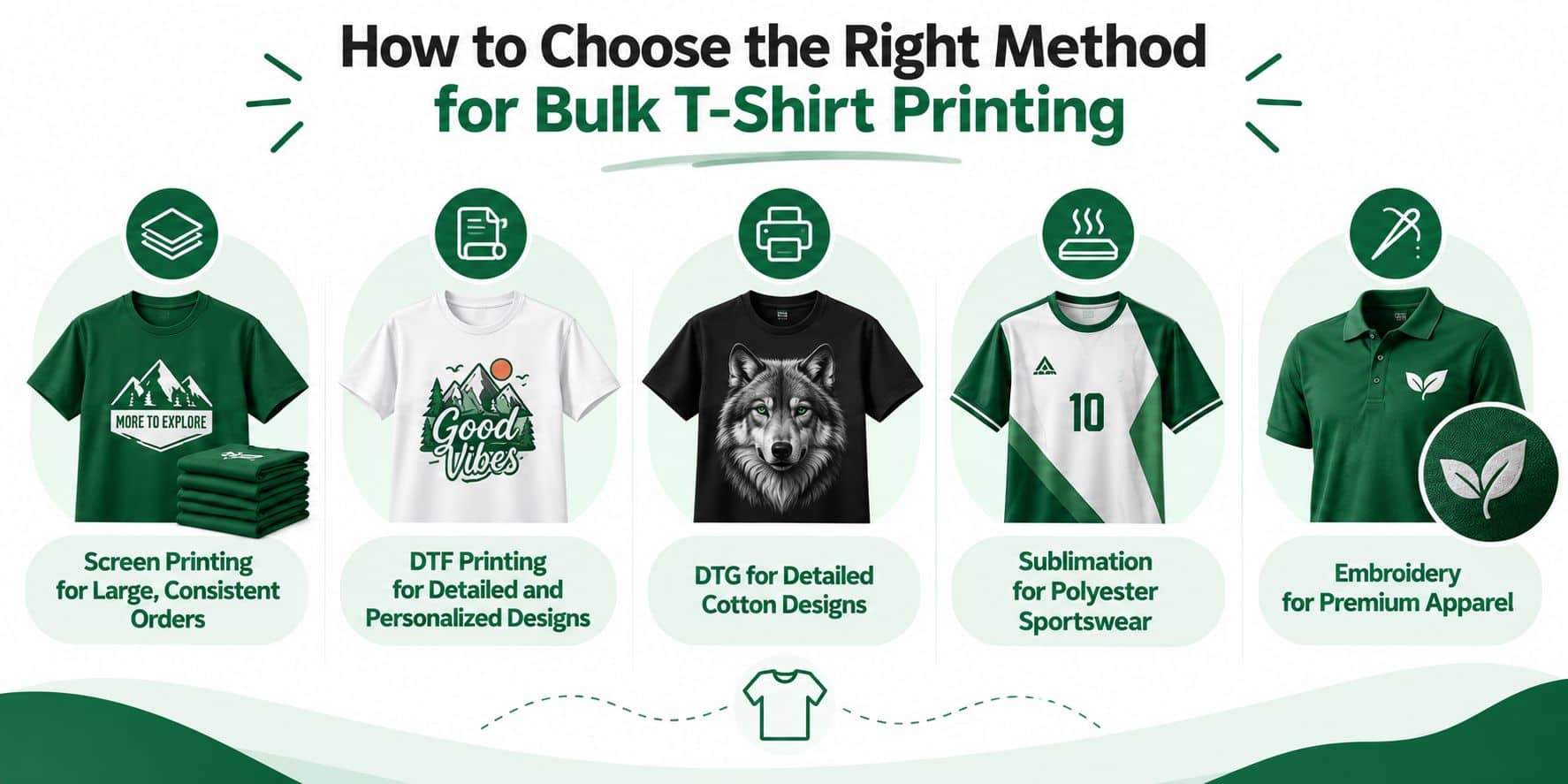
How to Choose the Right Method for Bulk T-Shirt Printing
The best printing method depends on more than order quantity. Your artwork, fabric, level of personalization, and desired finish should all be considered before choosing a production method.
Screen Printing for Large, Consistent Orders
Screen printing is a popular choice for large orders, particularly when every garment uses the same simple design. Because the initial setup can be spread across many garments, the cost per shirt can become more economical as quantity increases.
Screen printing works well for:
- Large quantities of identical T-shirts
- Simple logos and typography
- One- to four-color designs
- Large front or back prints
- School apparel
- Events and conferences
- Promotional campaigns
It may not be the most practical option for highly detailed photographic artwork or designs containing many colors.
If you’re looking for a production option for a large, consistent order, screen printing services can be a suitable choice.
DTF Printing for Detailed and Personalized Designs
Direct-to-Film (DTF) printing is useful when artwork contains multiple colors, gradients, detailed graphics, or individual personalization. The design is printed onto a special film before being transferred onto the garment with heat and adhesive.
DTF can work well for:
- Full-color graphics
- Detailed artwork
- Gradients
- Names and numbers
- Personalized garments
- Small- to medium-sized batches
- Cotton
- Polyester
- Blended fabrics
One of the biggest advantages of DTF is flexibility. If each shirt needs a different name, number, or design variation, it can be a practical alternative to traditional bulk printing methods.
DTG for Detailed Cotton Designs
Direct-to-Garment (DTG) printing applies ink directly to the garment, similar to how an inkjet printer applies ink to paper.
It can be particularly useful for:
- Detailed illustrations
- Photographic designs
- Small batches
- Cotton garments
- Designs where color detail is important
For hundreds of identical shirts, however, DTG may not provide the same production economics as screen printing.
Sublimation for Polyester Sportswear
Sublimation is especially suited to polyester performance apparel. It works well when you need vibrant designs or all-over decoration on sportswear.
Common applications include:
- Sports jerseys
- Dry-fit polyester
- Performance apparel
- Full-color designs
- All-over prints
Because sublimation is closely tied to polyester fabric, it generally isn’t the first choice for standard cotton T-shirts.
Embroidery for Premium Apparel
Embroidery isn’t technically a printing method, but it is an important apparel-decoration option for bulk orders.
It is commonly used for:
- Polo shirts
- Jackets
- Caps
- Corporate uniforms
- Small chest logos
- Premium branding
The raised, stitched appearance can create a professional look, particularly for uniforms and corporate apparel. Businesses looking for this type of decoration can consider custom embroidery services.
Quick Comparison of Printing Methods
🎨 Apparel Printing & Decoration Methods
Compare popular methods by design detail, bulk economics, and finished look.
| Method | Best For | Design Detail | Bulk Economics | Typical Finish |
|---|---|---|---|---|
| Screen Printing | Large identical orders | Good | Excellent | Ink / flat |
| DTF | Detailed, colorful designs | Excellent | Excellent | Smooth transfer |
| DTG | Detailed cotton designs | Excellent | Moderate | Soft printed |
| Sublimation | Polyester sportswear | Excellent | Good | Integrated print |
| Embroidery | Logos and uniforms | Moderate | Excellent | Raised / stitching |
Choose the decoration method based on your garment type, artwork, order size, and desired finish. Screen printing is strong for large identical runs, while DTF is a flexible choice for detailed and colorful designs.
There is no universally best option. A large order of identical two-color event shirts may require a different method from a smaller order where every garment has personalized artwork.
How to Select Garments for Bulk Apparel Printing
Even the best printing method can’t compensate for a garment that doesn’t suit the purpose. Before requesting a quote, determine what type of apparel your audience actually needs.
Compare Fabric Types
Common garment choices include:
100% cotton: Cotton is soft and breathable, making it a popular option for everyday T-shirts, events, and casual apparel.
Polyester: Polyester is useful for performance apparel, sportswear, and situations where moisture management and durability are important.
Cotton-polyester blends: Blended fabrics can provide a balance of comfort and durability while potentially reducing shrinkage compared with some cotton garments.
The right fabric depends on where and how the apparel will be used.
Understand GSM
GSM, or grams per square meter, indicates fabric weight. It can help you compare lightweight and heavyweight garments, but a higher GSM isn’t automatically better.
As a general guide:
- 140–160 GSM: Lightweight and budget-friendly for promotional giveaways and warm-weather events.
- Around 180 GSM: A practical mid-weight option for general events and casual uniforms.
- 220+ GSM: Heavier and more premium, making it suitable for retail merchandise, corporate gifts, and oversized streetwear.
Your climate, intended use, garment fit, and budget should all influence the decision.
Consider Fit, Color, and Size Range
Before placing your order, confirm:
- Regular, slim, oversized, or unisex fit
- Exact garment color
- Crew neck, V-neck, or polo style
- Required size range
- Garment brand and model
If you expect to place repeat orders, maintaining the same garment model can also make future reorders more consistent.
How to Calculate the Real Cost of Custom T-Shirts in Bulk
A low price per shirt doesn’t necessarily mean you’re getting the lowest overall cost.
When comparing quotes for bulk custom t-shirt printing, look beyond the base printing price and calculate the total landed cost.
A useful formula is:
Garment + Printing + Setup + Additional Print Positions + Personalization + Packaging + Shipping + Taxes = Total Cost
Depending on the supplier, additional charges may apply for:
- Back printing
- Sleeve printing
- Additional colors
- Individual names
- Individual numbers
- Special inks
- Oversized prints
- Artwork preparation
- Packaging
- Rush production
Always request an itemized quote so you can make an accurate comparison.
How Quantity Affects Bulk Pricing
Quantity can affect the economics of apparel printing because setup costs may be distributed across a larger number of garments.
For example, screen printing can become particularly cost-effective when producing large quantities of identical designs.
However, don’t order more apparel than you actually need simply to achieve a lower unit price. A lower per-shirt price doesn’t necessarily create savings if you end up with hundreds of unused garments.
For larger orders, bulk printing services can be useful when you’re looking for a provider equipped to handle higher-volume production.
How to Prepare Artwork for Bulk Shirt Printing
Artwork quality plays an important role in the final appearance of your apparel.
A small logo copied from a website may look acceptable on a screen but become blurry or pixelated when enlarged for a large print.
Use Production-Ready File Formats
Depending on the printing method, useful artwork formats may include:
- AI
- EPS
- SVG
- Suitable PDF
- High-resolution PNG
- Other high-resolution raster files where appropriate
Check Colors and Dimensions
Before submitting artwork, verify:
- Color specifications
- Transparent backgrounds
- Resolution
- Artwork dimensions
- Intended print area
- Color separation requirements for screen printing
Your artwork should also be prepared according to the printing method being used. A design intended for screen printing may require different preparation from one intended for DTF or DTG.
Why Sample Approval Matters Before a Bulk Apparel Order
One of the safest ways to reduce problems with a large order is to approve a physical sample or production proof before full production begins.
A digital mockup can show what the design is supposed to look like. A physical sample lets you evaluate what you’re actually going to receive.
What Should You Check?
Inspect the sample for:
- Garment color
- Fabric weight and feel
- Fit
- Logo size
- Logo placement
- Print color
- Print texture
- Alignment
- Embroidery quality
- Spelling
- Wash performance where practical
If something is wrong, correcting it before hundreds or thousands of garments are produced is much easier than fixing the entire order afterward.
How to Get Sizing Right When Ordering Custom T-Shirts in Bulk
Sizing is another area where bulk apparel orders can go wrong.
For employee, school, team, or organization orders, collect actual sizes whenever possible instead of estimating the size breakdown.
Don’t Assume Every Size Fits the Same
Different garment manufacturers can use different measurements for the same labeled size.
Ask your supplier for the actual size chart and confirm whether the measurements represent:
- Garment measurements
- Body measurements
Planning Sizes for Events
If you can’t collect individual sizes, consider:
- Reviewing size distributions from previous events.
- Checking the supplier’s actual size chart.
- Avoiding assumptions that all manufacturers use identical measurements.
- Keeping a small replacement buffer when appropriate.
- Considering your audience and event type.
For repeat orders, save your previous size distribution. It can provide a more useful starting point for the next order than making a completely new estimate.
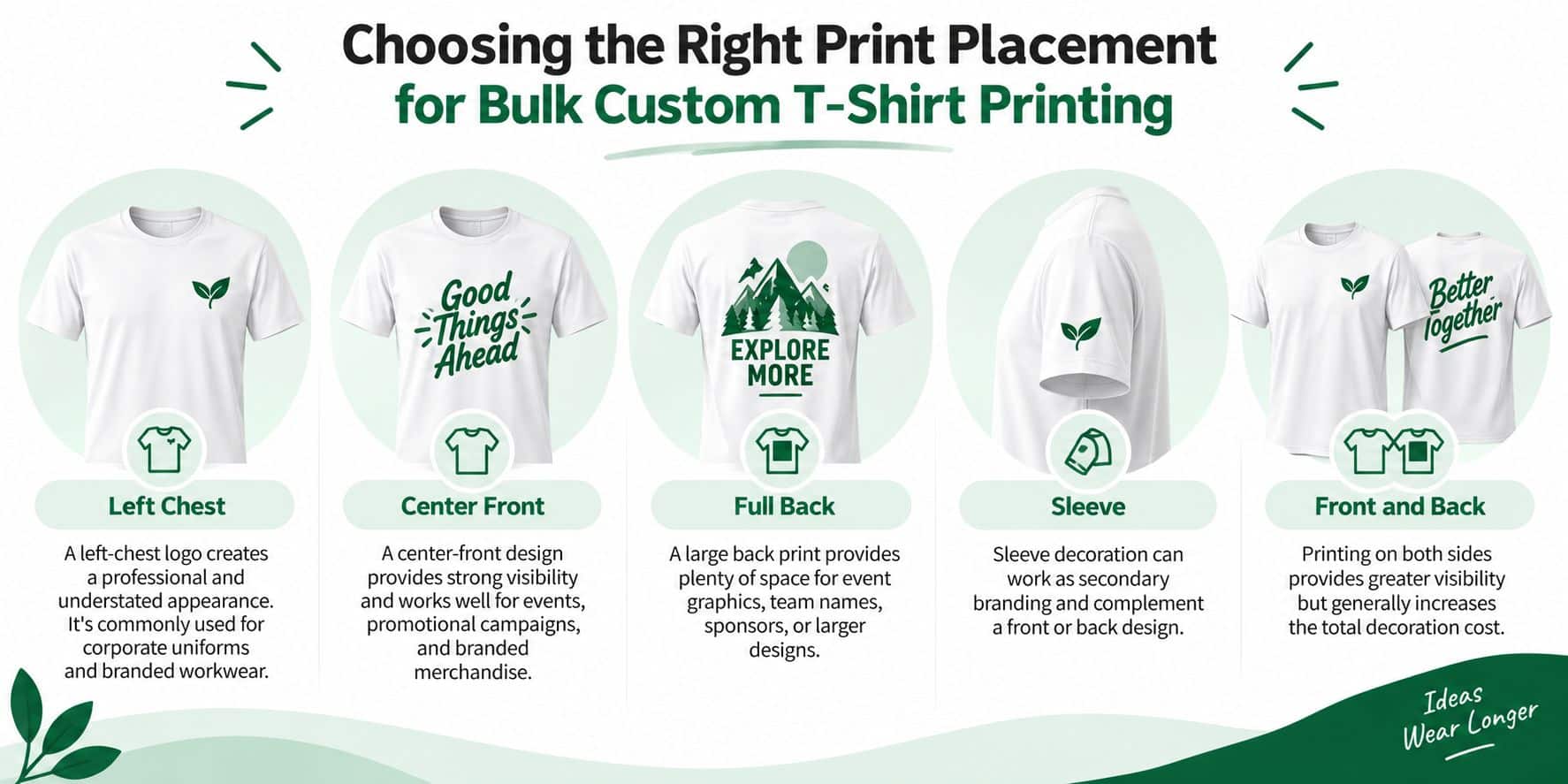
Choosing the Right Print Placement for Bulk Custom T-Shirt Printing
Print placement affects both the appearance and cost of your apparel.
Left Chest
A left-chest logo creates a professional and understated appearance. It’s commonly used for corporate uniforms and branded workwear.
Center Front
A center-front design provides strong visibility and works well for events, promotional campaigns, and branded merchandise.
Full Back
A large back print provides plenty of space for event graphics, team names, sponsors, or larger designs.
Sleeve
Sleeve decoration can work as secondary branding and complement a front or back design.
Front and Back
Printing on both sides provides greater visibility but generally increases the total decoration cost.
Think about the garment and its purpose when choosing placement. A small embroidered logo may work well on a polo, while a large printed graphic may be better suited to an event T-shirt.
Questions to Ask a Wholesale T-Shirt Printing Company
Before placing a large order, ask questions that help you understand exactly what you’re paying for and what you’ll receive.
Printing and Garment Questions
Ask:
- Which printing method do you recommend and why?
- What fabric and GSM are included?
- What is the exact print size?
- Can you maintain the same garment specifications for future reorders?
Pricing Questions
Confirm:
- Is setup included?
- Are additional print positions charged separately?
- Are taxes included?
- Is shipping included?
- Are artwork preparation charges included?
Production Questions
Ask:
- What is the minimum order quantity?
- What is the production timeline?
- Can you provide a physical sample?
- What happens if there is a production defect?
- How are color variations handled?
- What is the replacement policy?
A professional supplier should be able to answer these questions clearly before you commit to a large order.
Beyond T-Shirts: Other Bulk Apparel and Promotional Options
A bulk apparel program may include more than T-shirts. Depending on your organization or campaign, additional products can help create a consistent branded experience.
Patches for Branded Apparel
Patches can be useful for uniforms, clubs, teams, workwear, and other branded apparel. For buyers looking to add another decoration option, premium patches online can complement a larger apparel order.
Stickers and Banners for Events
If you’re preparing for an event or promotional campaign, apparel can be paired with additional branded materials. custom sticker printing services can help extend your branding beyond clothing.
Promotional Products
Businesses running larger campaigns may also need products beyond apparel. custom printed promo products can complement branded clothing and other marketing materials.
Union Apparel Programs
Organizations purchasing apparel as part of a union program may have additional requirements. union contract services can be relevant for these specialized apparel programs.
Best Practices for Repeat Bulk Apparel Orders
A successful first order can make future orders much easier when the specifications are properly documented.
Keep Your Original Specifications
Save the details of your completed order, including:
- Garment model
- Fabric composition
- GSM
- Color
- Size breakdown
- Print dimensions
- Print placement
- Artwork files
- Decoration method
Maintain Consistent Specifications
Changing garment models or decoration specifications between orders can lead to noticeable differences.
If consistency is important, maintain the same specifications whenever practical.
Create a Repeat-Order Process
For recurring apparel programs, keep records of:
- Approved artwork
- Garment specifications
- Previous size distributions
- Print dimensions
- Decoration methods
- Supplier requirements
For businesses ordering embroidered apparel regularly, best practices for ordering bulk custom embroidery apparel provides additional guidance.
A Simple Decision Guide for Bulk Apparel Printing
Use this guide as a starting point:
| Order Type | Recommended Starting Point |
| 100+ identical T-shirts with a simple logo | Screen printing |
| Detailed multicolor artwork | DTF or DTG |
| Small personalized batch | DTF |
| Cotton shirts with photographic artwork | DTG |
| Polyester sports jerseys | Sublimation |
| Premium polo or uniform logo | Embroidery |
| Large identical promotional order | Screen printing |
These are general starting points rather than strict rules. Your supplier should consider the actual artwork, garment, quantity, and desired result before recommending a production method.
The Bulk Apparel Ordering Checklist
Before paying a deposit or approving production, confirm the following:
- Exact garment model
- Fabric composition
- GSM
- Garment color
- Fit
- Complete size breakdown
- Printing or decoration method
- Print dimensions
- Print positions
- Artwork approval
- Physical sample or proof approval
- Unit price
- Setup charges
- Taxes
- Packaging
- Shipping
- Production deadline
- Delivery deadline
- Defect/replacement policy
- Final quantity
Having this information documented can make the ordering process easier and reduce the risk of unexpected costs.
Final Thoughts: Focus on Value, Not Just Price
A successful bulk apparel order starts with choosing the right combination of garment, artwork, decoration method, quantity, and supplier.
Screen printing can be a strong option for large orders with simple, consistent designs. DTF provides flexibility for detailed and personalized graphics, DTG can work well for detailed cotton prints in smaller runs, sublimation is particularly useful for polyester sportswear, and embroidery can provide a premium finish for uniforms and polos.
Most importantly, don’t evaluate a supplier based solely on the lowest quoted price. Garment quality, artwork preparation, sample approval, sizing, print consistency, quality control, and delivery reliability all contribute to the real value of a bulk apparel order.
For businesses and organizations ordering hundreds or thousands of garments, taking the time to confirm these details before production can help prevent costly mistakes and make future reorders much easier.
Whether you’re ordering event shirts, employee apparel, team uniforms, promotional merchandise, or retail products, the right planning can turn a large apparel order into a more predictable and successful investment.
Frequently Asked Questions
What is the best printing method for bulk T-shirts?
The best method depends on the quantity, artwork, fabric, personalization, and desired finish. Screen printing can work well for large quantities of identical designs, while DTF offers greater flexibility for detailed or personalized artwork.
How many T-shirts are considered a bulk order?
There is no universal definition of a bulk order. Minimum quantities vary by supplier and printing method. Instead of focusing only on a specific number, consider how quantity affects setup costs, unit pricing, and production requirements.
Is screen printing cheaper than DTF for bulk orders?
Screen printing can become economical for large quantities of identical designs because setup costs are spread across more garments. DTF may be more suitable when designs are detailed, colorful, or personalized.
What GSM is best for bulk T-shirts?
There isn’t one ideal GSM for every application. Lightweight garments can work well for promotional events, mid-weight shirts offer versatility, and heavyweight garments can be appropriate for premium merchandise and streetwear.
Should I order a sample before placing a bulk apparel order?
Yes, when possible. A physical sample lets you check the garment, fit, color, print size, placement, and overall quality before approving full production.
What artwork files are best for bulk apparel printing?
Vector files such as AI, EPS, SVG, and suitable PDF files can be useful for production. High-resolution raster artwork may also be appropriate depending on the printing method.
How far in advance should I order bulk custom T-shirts?
Allow enough time for artwork approval, garment sourcing, sampling, production, quality inspection, packing, shipping, and delivery. If the apparel is needed for an event, include contingency time rather than planning for delivery immediately before the event.