

Custom stickers can be an affordable way to promote a business, label products, decorate personal items, or build brand recognition. But one common question comes up before ordering: how long do custom stickers last?
The answer depends on several factors, including the sticker material, where it is applied, exposure to sunlight and moisture, and how often it is handled or washed. Indoor stickers can last for many years, while outdoor stickers generally face more wear and may need replacement sooner.
As a general guide, quality vinyl stickers can last around 3–5 years outdoors, while premium materials with protective finishes may last longer. Indoor stickers can potentially remain usable for 5–10 years or more when protected from direct sunlight and heavy handling.
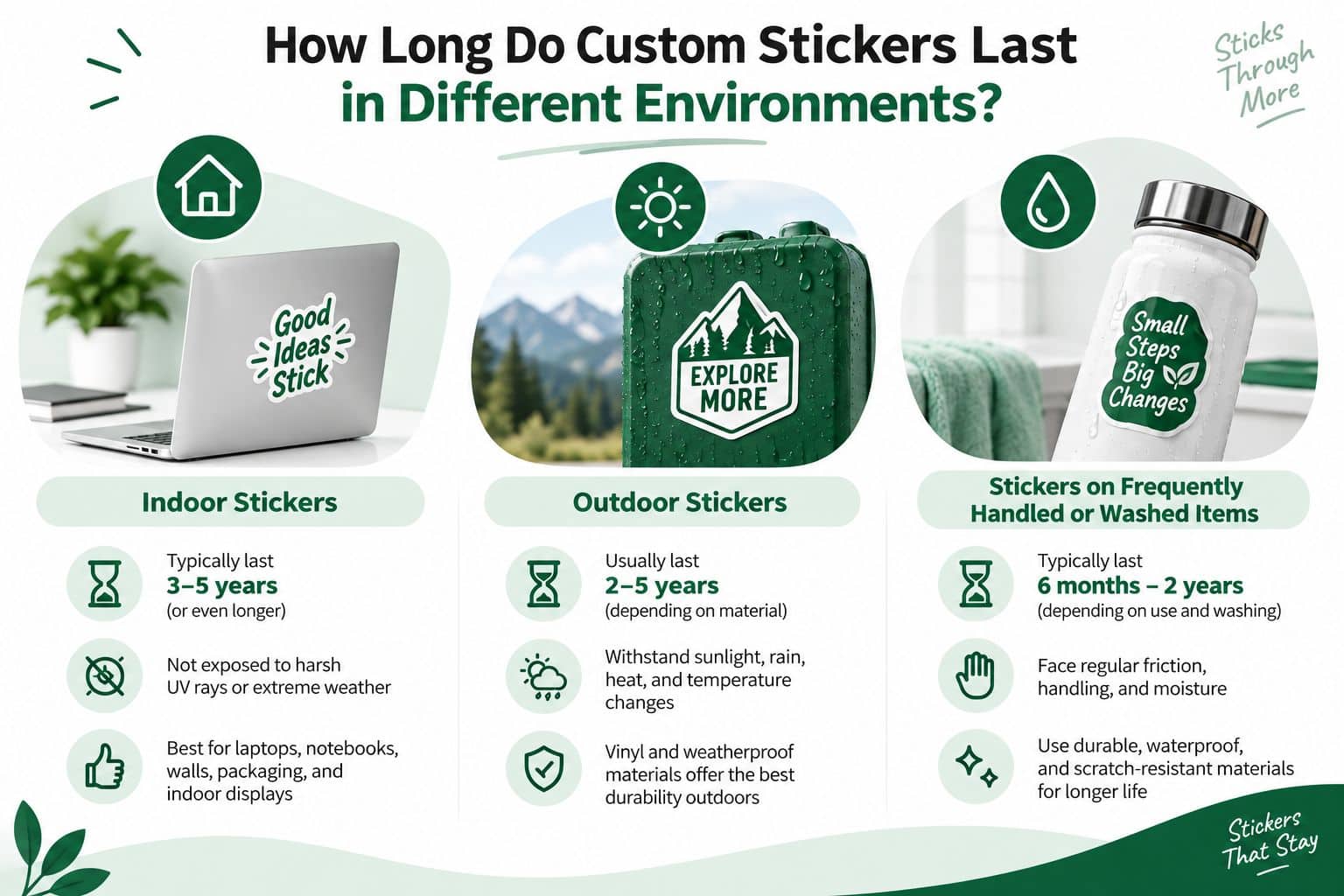
How Long Do Custom Stickers Last in Different Environments?
The environment where a sticker is used has a major impact on its lifespan. A sticker placed on an indoor wall has very different durability requirements from one attached to a vehicle or outdoor sign.
Indoor Stickers
Indoor stickers typically experience less exposure to UV rays, rain, humidity, temperature changes, and physical abrasion. As a result, they can remain in good condition for many years.
Stickers used on packaging, laptops, indoor displays, office equipment, walls, and retail materials may last 5–10 years or longer, depending on the material and amount of handling.
If a sticker is kept away from direct sunlight and moisture, its useful life may be considerably longer than an outdoor sticker.
Outdoor Stickers
Outdoor stickers have to withstand much tougher conditions. Direct sunlight can gradually fade printed colors, while rain, humidity, temperature fluctuations, dirt, and abrasion can affect both the sticker material and adhesive.
For quality outdoor vinyl, 3–5 years is a reasonable general expectation. Premium vinyl and protective finishes can potentially extend that lifespan, although actual performance depends on the application and local conditions.
Stickers on Frequently Handled or Washed Items
A sticker may wear out faster when it is constantly touched, washed, scratched, or exposed to cleaning products.
Water bottles, coolers, equipment, and other frequently used items can experience more physical wear than a sticker placed on a protected indoor surface. Even when the sticker material is waterproof, repeated washing and abrasion can eventually cause fading, scratching, or edge lifting.
How Long Do Custom Stickers Last by Material?
Material selection is one of the biggest factors affecting custom sticker durability. Different materials are designed for different environments and applications.
Custom Sticker Lifespan Guide
Compare sticker materials by expected lifespan and the applications they are best suited for.
| 🏷️ Sticker Type | ⏳ Typical Lifespan | 🎯 Best Use |
|---|---|---|
| Paper Stickers | Months indoors; limited outdoor use | Packaging and short-term promotions |
| Standard Vinyl | Around 3–5 years outdoors | General outdoor branding |
| Laminated Vinyl | Around 3–5+ years | Outdoor and higher-use applications |
| Premium Cast Vinyl + UV Laminate | Potentially 5–8+ years | Long-term outdoor applications |
| Specialty Finishes | Often shorter outdoors | Decorative and promotional uses |
For short-term indoor applications, paper stickers can be a practical choice. For demanding outdoor use, vinyl, laminated vinyl, or premium cast vinyl with UV protection generally offers better durability.
These are practical estimates rather than guarantees. Actual results vary based on exposure, surface, application quality, and care.
Paper vs. Vinyl Stickers
Paper stickers are generally better suited to indoor applications and short-term uses. Moisture can quickly damage paper, making it a poor choice for applications that regularly encounter rain, condensation, or washing.
Vinyl is more versatile because it offers better resistance to moisture and everyday wear. If you’re deciding between materials, understanding the differences between vinyl vs. paper stickers can help you choose an option that fits your intended use.
Waterproof Custom Stickers
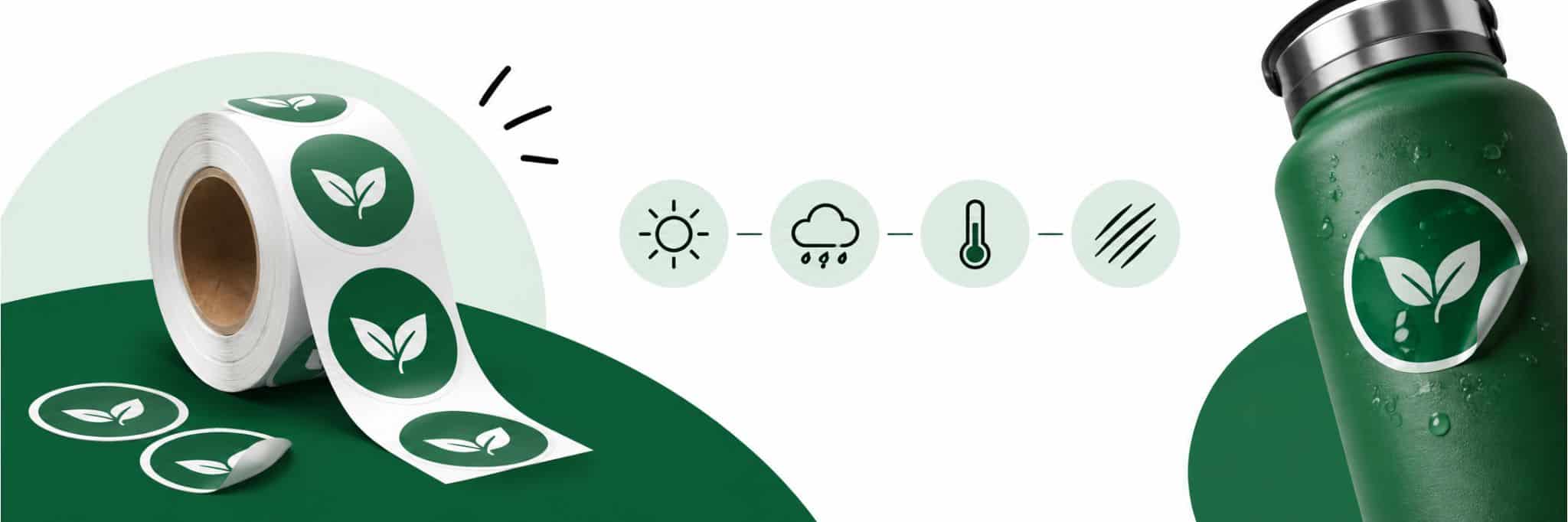
Waterproof custom stickers are designed to resist moisture, but waterproofing alone does not determine overall durability.
For outdoor applications, you also need to consider UV resistance, adhesive performance, material quality, and abrasion. A sticker may handle water well but still fade faster if it receives constant direct sunlight.
For items exposed to both water and sunlight, a durable vinyl construction with a suitable protective finish is generally a better choice than a basic paper sticker.
Specialty Finishes
Holographic, glitter, metallic, and other specialty stickers can create an eye-catching appearance. However, their outdoor durability may differ from standard vinyl because of the materials and surface films used to create the effect.
If a specialty sticker will be exposed to the elements for long periods, check that the specific construction is suitable for outdoor use rather than assuming every specialty finish has the same lifespan.
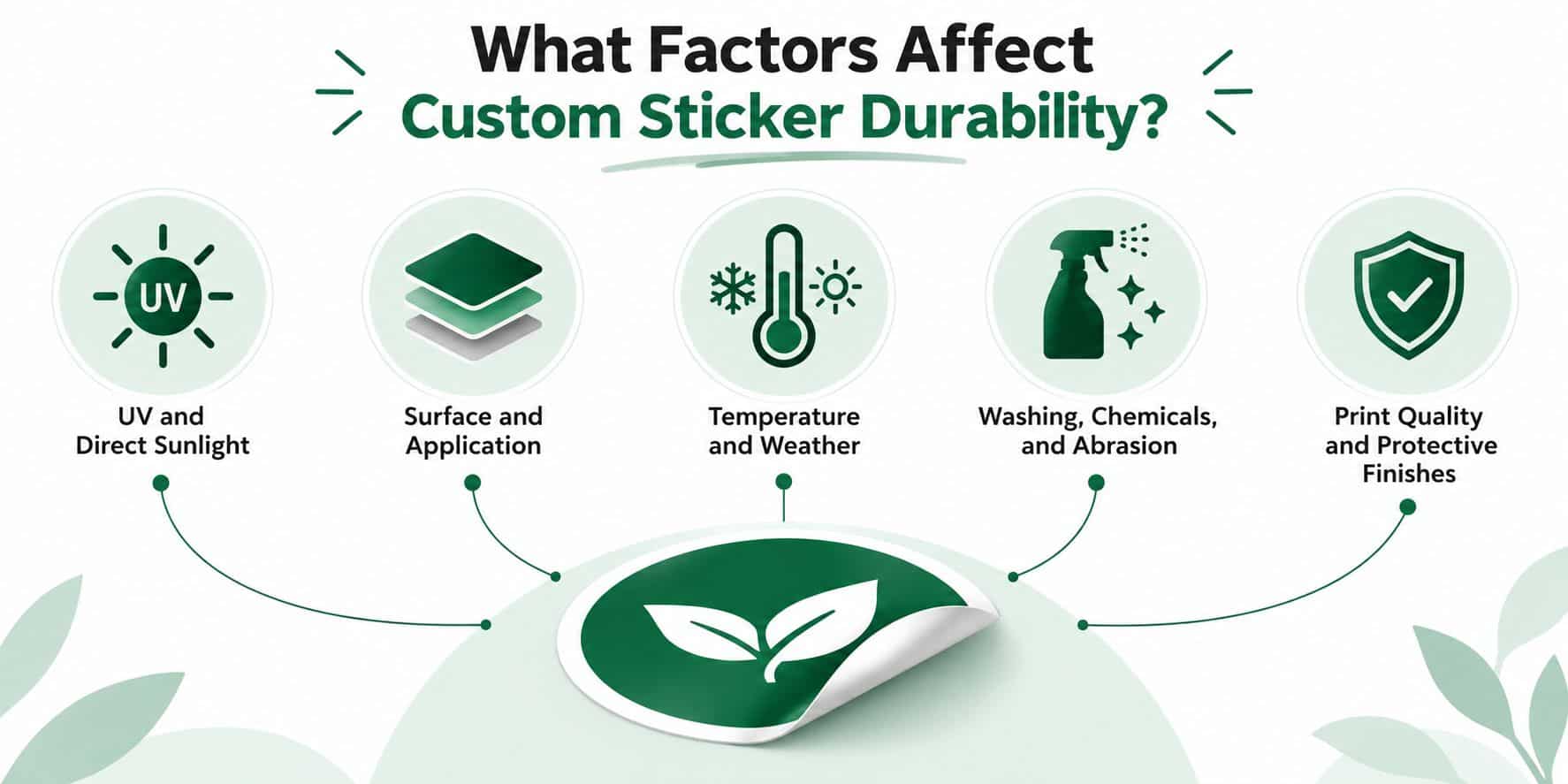
What Factors Affect Custom Sticker Durability?
Knowing how long stickers last is easier when you understand what causes them to deteriorate.
UV and Direct Sunlight
Sunlight is one of the biggest threats to outdoor sticker longevity. Ultraviolet radiation can gradually fade printed colors and contribute to material degradation.
A sticker placed in full sun throughout the day will generally experience more stress than one installed in a shaded or partially protected location. Horizontal surfaces can also receive substantial direct exposure.
For applications that need to maintain their appearance for years, UV-resistant materials and protective finishes can be worthwhile.
Surface and Application
The surface underneath the sticker matters almost as much as the sticker itself.
Smooth, clean, dry, and non-porous surfaces such as glass, metal, and hard plastics typically provide favorable conditions for adhesion. Dirt, grease, dust, moisture, and textured surfaces can interfere with the adhesive and contribute to premature lifting.
Proper surface preparation before application can therefore make a noticeable difference in the sticker’s useful life.
Temperature and Weather
Outdoor stickers may experience heat, cold, humidity, rain, and repeated temperature changes. These conditions can affect both the sticker material and its adhesive.
Applications in demanding outdoor environments should use materials specifically intended to handle weather exposure. A sticker designed primarily for indoor use may not perform well when placed outside year-round.
Washing, Chemicals, and Abrasion
Repeated washing and physical contact can shorten sticker life even when weather is not a concern.
Car washes, pressure washing, aggressive scrubbing, harsh cleaning chemicals, and constant rubbing can gradually damage the printed surface or cause the edges to lift.
For frequently cleaned items, durability should be considered alongside waterproofing.
Print Quality and Protective Finishes
The sticker’s printed surface also matters. A protective laminate can provide an additional barrier against UV exposure, moisture, scratches, and everyday abrasion.
That does not mean every sticker needs a laminate. For short-term indoor applications, the additional protection may not provide enough value to justify the extra cost. For demanding outdoor applications, however, it can be a useful investment.
How Long Do Custom Stickers Last Outdoors? A Practical Guide
If you’re specifically wondering how long do custom stickers last outdoors, the answer depends heavily on what the sticker is attached to and how much exposure it receives.
Cars and Vehicles
Vehicle stickers face a combination of sunlight, rain, road grime, temperature changes, and frequent washing.
A sticker placed on a vehicle should therefore be made from an outdoor-rated material. Its exact location also matters. Areas that receive constant sunlight or frequent physical contact may show wear sooner than more protected locations.
Outdoor Signs and Windows
Windows and other smooth surfaces can provide good conditions for sticker adhesion when properly cleaned and prepared.
However, a sticker installed on a window with constant direct sunlight can experience significant UV exposure. Choosing an outdoor-rated material with appropriate protection can help preserve its appearance.
Water Bottles, Coolers, and Equipment
Items such as water bottles and coolers are exposed to repeated handling and washing. Even durable stickers can eventually show scratches, fading, or edge wear under these conditions.
If the item will be washed regularly, prioritize a material designed for moisture and physical wear rather than selecting based only on appearance.
Business and Promotional Stickers
Businesses often use stickers on packaging, equipment, windows, products, vehicles, and promotional materials. The right material depends on whether the sticker is intended for short-term promotion or long-term branding.
For a temporary event, a lower-cost option may be practical. For permanent outdoor branding, investing in more durable materials can reduce the need for frequent replacement.
If you’re looking for more ideas on using stickers as part of a business strategy, this custom stickers for small business guide can provide additional context.
How to Make Custom Stickers Last Longer
Choosing a durable sticker is only part of the equation. Proper application and care can also help maximize its useful life.
Choose the Right Material for the Application
Start by considering where the sticker will be used.
- Indoor and low-contact applications: Paper or standard vinyl may be sufficient.
- Outdoor applications: Choose weather-resistant vinyl.
- Long-term outdoor use: Consider premium vinyl with UV protection.
- Frequently washed items: Choose durable, waterproof vinyl.
- Short-term events: An economical material may be appropriate.
The goal is not necessarily to buy the most expensive sticker. Instead, select the material that matches the demands of the application.
Use UV Protection for Outdoor Applications
If a sticker will spend years outdoors, UV protection can help reduce the effects of prolonged sunlight.
A protective laminate can also help defend the printed surface against moisture, scratches, and abrasion. This can be especially valuable for vehicle graphics, outdoor signage, and other applications where replacement is inconvenient.
Prepare the Surface Properly
Before applying a sticker:
- Clean the surface thoroughly.
- Remove grease, dust, and residue.
- Allow the surface to dry completely.
- Apply the sticker carefully to avoid bubbles and wrinkles.
- Give the adhesive appropriate time to bond.
Even a high-quality sticker may perform poorly if it is applied to a dirty, wet, or unsuitable surface.
For additional preparation and design considerations, this custom sticker & banner printing guide can be useful.
Follow Proper Application and Care
Avoid unnecessary picking or rubbing around the sticker’s edges. When cleaning the surface, use methods appropriate for the sticker rather than aggressive scrubbing or harsh chemicals.
For items that require frequent washing, gentle cleaning can help reduce premature wear.
How to Choose Durable Custom Stickers for Your Needs
The best sticker is not necessarily the one with the longest advertised lifespan. It is the one that provides the right balance of durability, appearance, cost, and intended use.
Match the Sticker to the Application
Consider these common scenarios:
Indoor branding: Standard vinyl or paper may be enough.
Outdoor branding: Choose weather-resistant vinyl.
Long-term outdoor use: Premium vinyl with a protective finish may be worth considering.
Water bottles and coolers: Look for waterproof and abrasion-resistant construction.
Short-term events: A basic, economical sticker may provide enough durability.
If you need professionally produced stickers, custom sticker printing services can help you select a suitable option based on the application, quantity, and desired finish.
When Should You Prioritize Durability Over Price?
A cheaper sticker can make sense for a short campaign, event, or temporary promotion. However, choosing a low-durability material for a permanent application may result in more frequent replacement.
For business branding, durability can also affect how professional your materials look. Faded colors, peeling edges, and damaged surfaces can make otherwise well-designed branding appear neglected.
Ordering Custom Stickers in Larger Quantities
Businesses, organizations, events, and promotional campaigns may need stickers in larger quantities. Ordering in bulk can make sense when you already know the required design and expect to use the stickers consistently.
For larger apparel and promotional projects, bulk printing services can also make it easier to coordinate stickers with other branded materials.
Stickers as Part of a Broader Branding Strategy
Stickers do not have to work alone. Businesses can combine them with apparel, promotional products, patches, and other branded materials to create a more consistent visual identity.
Depending on the project, options such as custom printed promo products, screen printing services, or custom embroidery services can complement a sticker campaign. For organizations with specialized apparel requirements, union contract services may also be relevant.
The key is to choose each product based on where and how it will be used rather than trying to use one material for every application.
When Should You Replace a Custom Sticker?
Age alone does not necessarily mean a sticker needs to be replaced. Look for visible signs that the sticker is no longer performing or representing your brand effectively.
Common warning signs include:
- Significant color fading
- Cracking or brittleness
- Peeling edges
- Bubbling or lifting
- Scratches across the printed surface
- Water or dirt getting underneath
- Loss of adhesion
- Important text or graphics becoming difficult to read
For branding applications, appearance matters just as much as physical adhesion. A sticker that technically remains attached but looks heavily faded or damaged may still be ready for replacement.
How Long Do Custom Stickers Actually Last?
So, how long do custom stickers last? There is no single answer for every application.
For many projects, 3–5 years is a practical expectation for quality outdoor vinyl, while premium constructions can potentially last longer. Indoor stickers can remain useful for 5–10 years or more when protected from direct sunlight and heavy handling.
The most important step is to match the material and protective finish to the environment. Consider sunlight, moisture, surface type, washing, handling, and the length of time you need the sticker to remain in good condition.
When durability matters, choosing the right sticker construction from the beginning can help you avoid premature fading, peeling, and replacement while keeping your branding looking professional.
Frequently Asked Questions About Custom Sticker Durability
How long do custom stickers last?
The lifespan of custom stickers varies by material and environment. Indoor stickers can last 5–10 years or longer under favorable conditions, while quality outdoor vinyl commonly lasts around 3–5 years. Premium materials and protective finishes may last longer.
How long do custom stickers last outdoors?
Quality outdoor vinyl stickers typically last around 3–5 years, although premium vinyl with UV protection can potentially last 5–8 years or more depending on sunlight, weather, surface, and maintenance.
Are waterproof custom stickers good for outdoor use?
Yes, waterproof custom stickers can be suitable for outdoor applications, especially where moisture is a concern. However, waterproofing alone does not guarantee long-term outdoor durability. UV resistance, material quality, adhesive performance, and protective finishes should also be considered.
What makes a custom sticker more durable?
Several factors contribute to durability, including quality vinyl, suitable adhesive, UV protection, protective laminate, proper surface preparation, and correct application. The conditions where the sticker will be used also have a major effect.
Do stickers last longer indoors or outdoors?
Stickers generally last longer indoors because they experience less direct sunlight, moisture, temperature variation, and physical wear. Outdoor stickers face more environmental stress and therefore typically require more durable materials.