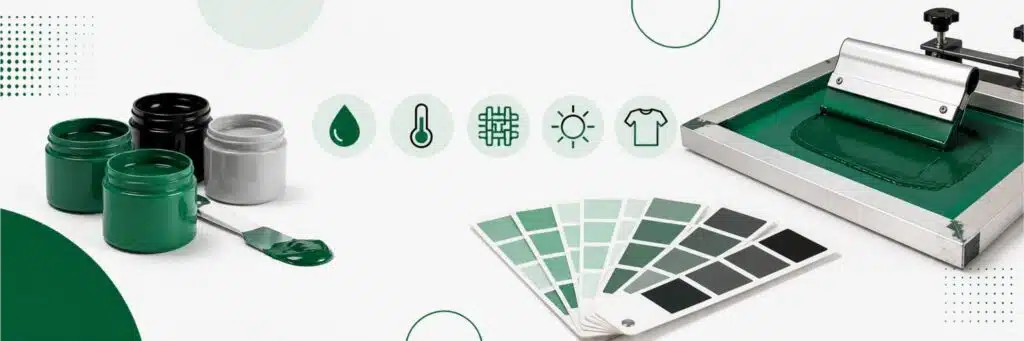



Screen printing continues to be a preferred choice for businesses, brands, schools, sports teams, and organizations because of its durability, vibrant color output, and cost-effectiveness for bulk apparel production.
The process involves transferring ink through a mesh screen onto a garment, creating long-lasting prints that can withstand repeated washing and everyday wear. From custom t-shirts and hoodies to uniforms and promotional merchandise, screen printing remains one of the most reliable decoration methods in the apparel industry.
In this guide, we’ll explain what screen printing is, how it works, its benefits, limitations, and why it continues to be a leading apparel printing solution in 2026.
What is Screen Printing?
If you’ve ever wondered what is screen printing or what does screen printing mean, it is a traditional printing technique that transfers ink onto a surface through a mesh screen and stencil. Each color in the design is applied using a separate screen, allowing printers to create bold, vibrant, and highly durable prints.
Screen printing is widely used for decorating t-shirts, hoodies, uniforms, tote bags, and promotional products because of its excellent color consistency and long-lasting results. Unlike some digital printing methods, screen printing produces thick ink layers that withstand repeated washing and everyday wear.
This makes it one of the most popular apparel printing methods for businesses, brands, schools, sports teams, and large-volume merchandise orders.
Tools, Materials, and Equipment Used for Screen Printing
The quality of a screen-printed design depends heavily on the tools, materials, and equipment used throughout the production process. Whether you’re producing a few custom shirts or managing large-scale apparel orders, understanding the essential components of the screen printing process helps ensure consistent, professional results.
1. Screen Printing Screens and Mesh
The screen is the foundation of the printing process. It consists of a mesh stretched tightly over a frame that allows ink to pass through specific design areas.
- Aluminum or wooden frames
- Various mesh counts for different ink types
- Used to create stencils for each color layer
- Critical for print detail and accuracy
The mesh count selected directly impacts image sharpness, ink coverage, and overall print quality.
2. Emulsion and Exposure Equipment
To transfer artwork onto a screen, printers use a light-sensitive emulsion.
- Photo emulsion coating
- Exposure units
- Washout booths
- Artwork transparencies
These tools help create the stencil that defines where ink will pass through during printing.
Many businesses that outsource production through contract screen printing services rely on professional exposure equipment to maintain consistency across large production runs.
3. Screen Printing Inks
Ink selection plays a major role in durability, feel, and appearance.
Common screen printing ink types include:
- Plastisol ink
- Water-based ink
- Discharge ink
- Specialty inks (metallic, puff, glitter)
Different garments and applications require different ink systems to achieve the desired result.
4. Squeegees and Printing Presses
The squeegee pushes ink through the screen and onto the garment.
- Manual squeegees
- Automatic presses
- Multi-color carousel presses
- Precision registration systems
Modern presses improve speed, consistency, and color alignment, especially for complex artwork.
Companies offering contract decoration services often use advanced automatic presses to handle high-volume apparel production while maintaining consistent quality standards.
5. Dryers and Curing Equipment
After printing, the ink must be cured to ensure durability.
- Conveyor dryers
- Flash cure units
- Heat tunnels
- Temperature monitoring systems
Proper curing prevents cracking, fading, and wash-related print failures.
6. Additional Screen Printing Supplies
Several supporting materials are required throughout production.
- Pallet adhesives
- Cleaning chemicals
- Registration tape
- Screen reclaiming supplies
- Protective gloves and maintenance tools
These supplies help maintain equipment efficiency and ensure accurate print results.
Beyond apparel, many businesses use screen printing equipment to decorate promotional products. Services such as custom promotional products often utilize similar printing tools to create branded merchandise, giveaways, and marketing materials with long-lasting designs.
How Does Screen Printing Work: Step-by-Step Process
Understanding how screen printing works is essential if you’re considering custom apparel production. The screen printing process involves transferring ink through a mesh screen onto a garment, creating durable and vibrant designs. While there are different types of screen printing, the basic workflow remains similar.
1. Create the Design
The process begins with preparing the artwork. The design is separated by color because each color requires its own screen.
- Artwork is finalized digitally.
- Colors are separated into individual layers.
- Each color will use a separate stencil.
2. Prepare the Screen
A mesh screen is coated with light-sensitive emulsion and exposed to the design.
- The artwork blocks light exposure.
- Unexposed emulsion washes away.
- A stencil is created on the screen.
3. Set Up the Printing Press
The screens are mounted onto a printing press and aligned precisely.
- Garments are loaded onto platens.
- Screens are positioned accurately.
- Registration ensures color alignment.
4. Apply the Ink
Ink is pushed through the mesh screen using a squeegee.
- Ink passes through open stencil areas.
- The design transfers onto the garment.
- Each color is printed separately.
5. Cure the Print
After printing, the garment passes through a dryer to cure the ink.
- Heat permanently bonds the ink.
- Improves durability and wash resistance.
- Prevents cracking and fading.
6. Quality Inspection and Finishing
The final product is inspected before packaging.
- Check print quality and color accuracy.
- Remove defects if necessary.
- Fold, package, and prepare for delivery.
Types of Screen Printing
There are several types of screen printing used in the apparel industry, each designed to achieve different visual effects, fabric compatibility, and production goals. Choosing the right method depends on your design complexity, garment type, budget, and order volume.
1. Spot Color Screen Printing
Spot color printing is the most common technique used for custom apparel.
- Uses pre-mixed ink colors.
- Produces vibrant and consistent prints.
- Ideal for logos, text, and simple artwork.
- Cost-effective for large production runs.
This method is widely used for company uniforms, event merchandise, and promotional apparel because it delivers excellent color accuracy and durability.
For businesses placing large-volume apparel orders, services like bulk screen printing orders often rely heavily on spot color printing due to its efficiency and scalability.
2. Halftone Screen Printing
Halftone printing creates the appearance of gradients and multiple shades using tiny dots.
- Uses a single ink color.
- Simulates shadows and color transitions.
- Reduces the number of required screens.
- Works well for detailed artwork.
This technique is often used for artistic designs and photographic-style prints where full-color reproduction is not necessary.
3. CMYK Process Printing
CMYK printing combines four ink colors—Cyan, Magenta, Yellow, and Black—to reproduce complex images.
- Suitable for full-color artwork.
- Produces photo-quality prints.
- Requires precise screen alignment.
- Best on light-colored garments.
When customers need fast turnaround on complex designs, providers offering rush screen printing services may use CMYK printing to efficiently recreate detailed graphics.
4. Simulated Process Printing
Simulated process printing combines spot colors and halftones to achieve highly detailed prints.
- Ideal for dark garments.
- Produces vibrant color depth.
- Creates realistic image reproduction.
- Popular for fashion and retail apparel.
Among the most advanced screen printing types, simulated process printing is commonly used for premium merchandise and complex artwork.
Many companies creating custom-branded clothing through branded apparel programs choose this method because it delivers professional retail-quality results.
5. Specialty Screen Printing
Specialty printing focuses on unique textures and visual effects.
- Puff printing for raised designs.
- Metallic inks for reflective finishes.
- Glow-in-the-dark effects.
- High-density and glitter printing.
These specialty options help brands create standout apparel and premium merchandise collections.
For creators and ecommerce businesses using on-demand merchandise services, specialty printing can add unique value and help products stand out in competitive markets.
How to Create a Design for Screen Printing
Creating artwork for screen printing requires a different approach than designing for digital printing. Since each ink color is printed separately, your design must be optimized for the screen printing process to ensure accurate color reproduction, sharp details, and cost-effective production.
Start by creating your artwork in a vector-based design program such as Adobe Illustrator or CorelDRAW. Vector files can be scaled without losing quality, making them ideal for apparel printing.
Follow these key steps:
- Keep the design simple and bold for better print clarity.
- Limit the number of colors since each color requires a separate screen.
- Convert text to outlines to avoid font compatibility issues.
- Use high-resolution artwork (300 DPI minimum for raster images).
- Separate colors properly so each ink layer can be printed individually.
- Avoid extremely thin lines or tiny details that may not reproduce well on fabric.
- Choose colors that contrast with the garment color for maximum visibility.
- Size the design according to the print area on the shirt, hoodie, or apparel item.
Before production, most printers create a digital proof to verify placement, colors, and dimensions. Reviewing the proof carefully helps prevent costly mistakes.
A well-prepared screen printing design not only improves print quality but also reduces setup time, minimizes production issues, and delivers a cleaner, more professional final product.
Screen Printing vs Sublimation vs Heat Press: A Quick Comparison
When choosing a custom apparel printing method, it’s important to understand how screen printing, sublimation, and heat press printing differ. Each technique has its strengths, limitations, and ideal use cases depending on your design, garment type, order size, and budget.
Screen printing is best known for its durability, vibrant colors, and cost-efficiency on large orders. It uses mesh screens and ink layers to create long-lasting prints, making it ideal for bulk apparel production such as company uniforms, event shirts, and promotional merchandise.
Sublimation printing works by turning ink into gas and bonding it directly into polyester fibers. This produces highly detailed, full-color prints that never crack or peel. However, sublimation only works effectively on light-colored polyester garments and is not suitable for cotton.
Heat press printing involves applying a printed design or vinyl transfer onto fabric using heat and pressure. It is popular for small orders, personalized apparel, and print-on-demand projects because it requires minimal setup and offers fast turnaround times.
For businesses producing large apparel runs, screen printing often delivers the lowest cost per garment. Sublimation excels for sportswear and all-over prints, while heat press methods are ideal for one-off custom designs and short production runs.
Quick Comparison Table
| 📊 Feature | 🖨️ Screen Printing | 🎨 Sublimation Printing | 🔥 Heat Press Printing |
|---|---|---|---|
| Best For | Bulk orders | Polyester apparel | Small runs & custom orders |
| Print Durability | Excellent | Excellent | Good to Very Good |
| Color Vibrancy | High | Extremely High | High |
| Setup Cost | Higher | Moderate | Low |
| Cost for Large Orders | Lowest | Moderate | Higher |
| Fabric Compatibility | Cotton, blends, polyester | Polyester only | Most fabrics |
| Full-Color Designs | Limited by colors | Excellent | Excellent |
| Small Order Friendly | No | Yes | Yes |
| Feel on Fabric | Soft | No feel (embedded ink) | Slightly raised |
| Production Speed | Fast for bulk orders | Moderate | Fast for small runs |
Bottom line: If you’re printing hundreds of shirts, screen printing is usually the most economical option. For polyester sportswear and vibrant all-over graphics, sublimation is the better choice. For personalized apparel, names, numbers, and short runs, heat press printing offers the most flexibility.
Best Practices for Quality Screen Printing
Achieving professional results with screen printing requires more than just quality equipment. Proper artwork preparation, ink selection, screen setup, and curing techniques all play a crucial role in producing vibrant, durable prints that withstand repeated washing and everyday wear.
1. Start with High-Quality Artwork
The quality of your final print depends heavily on the quality of your design.
- Use vector files whenever possible.
- Maintain sharp lines and clean edges.
- Convert text to outlines before production.
- Ensure proper color separation for multi-color designs.
Poor artwork often leads to blurry prints, misalignment, and inconsistent results.
2. Choose the Right Screen Mesh
Different fabrics and inks require different mesh counts.
- Lower mesh counts work well for bold designs and specialty inks.
- Higher mesh counts produce finer details and smoother prints.
- Match mesh selection to the chosen screen printing method for optimal ink flow.
Using the wrong mesh can affect color vibrancy and print clarity.
3. Select Appropriate Inks
Not all inks perform equally across different garment types.
- Plastisol inks offer excellent durability.
- Water-based inks create a softer hand feel.
- Specialty inks add unique effects and textures.
When exploring various types of screen printing, ink selection often determines the overall appearance and performance of the finished product.
4. Maintain Consistent Registration
Proper registration ensures all colors align perfectly during printing.
- Use alignment guides.
- Test print before full production.
- Check registration regularly throughout large print runs.
Even minor registration issues can significantly impact print quality.
Learn more about adding custom finishing elements such as embroidered patches and branding solutions through custom patches services.
5. Use Proper Curing Techniques
Incorrect curing is one of the leading causes of cracking, fading, and peeling.
- Follow manufacturer-recommended curing temperatures.
- Test wash durability before large production runs.
- Verify full ink curing using proper testing methods.
Regardless of the screen printing technique used, proper curing is essential for long-lasting results.
6. Choose Quality Garments
The fabric itself affects print performance.
- Use garments with consistent fabric composition.
- Pre-test new apparel styles before production.
- Consider how different materials react to ink and curing temperatures.
For schools and organizations producing custom apparel, school spirit wear programs can help streamline large apparel projects.
7. Perform Quality Control Throughout Production
Never wait until the end of a run to inspect prints.
- Check color consistency regularly.
- Monitor ink coverage.
- Inspect for pinholes, smudges, and registration issues.
- Review random samples throughout production.
8. Expand Beyond Apparel When Appropriate
Many businesses combine garment decoration with signage and promotional materials to create a complete branding package. Services such as wide format printing solutions can complement custom apparel campaigns and improve brand visibility.
By following these best practices, printers can consistently produce high-quality screen-printed apparel with excellent durability, vibrant colors, and professional results across a wide range of projects.
To Wrap Up
Screen printing remains one of the most trusted and effective apparel decoration methods because it combines durability, vibrant colors, and cost-efficiency for bulk orders. Whether you’re creating custom t-shirts, uniforms, promotional merchandise, or branded apparel, understanding the screen printing process helps you choose the right solution for your needs.
From artwork preparation and screen setup to ink selection and curing, every step contributes to the final quality. If you’re looking for reliable, high-quality screen printing services, Shirt.co offers the expertise, equipment, and production capabilities to deliver professional results for businesses, schools, organizations, and brands of any size.
Frequently Asked Questions
Is screen printing environmentally friendly?
Screen printing can be environmentally friendly when printers use water-based inks, eco-friendly cleaning solutions, and sustainable production practices. Many modern print shops also reduce waste by recycling screens and minimizing excess ink usage.
How long does it take to complete a screen printing order?
The turnaround time for screen printing depends on order size, design complexity, and production schedules. Most standard orders are completed within 5–10 business days, while rush orders may be produced faster for an additional fee.
What file format is best for screen printing artwork?
Vector file formats such as AI, EPS, and PDF are preferred because they maintain image quality at any size. High-resolution PNG files can also work, but vector artwork delivers the best results for sharp and accurate prints.
Can screen printing be used on items other than apparel?
Yes. Screen printing is commonly used on tote bags, posters, banners, promotional products, packaging materials, signs, and various branded merchandise items, making it a versatile printing solution for businesses and organizations.
Is screen printing suitable for small businesses and startups?
Absolutely. Screen printing is an excellent option for small businesses that need professional-looking branded apparel, promotional merchandise, or company uniforms. It offers durable prints, strong brand visibility, and competitive pricing, especially as order quantities increase.