

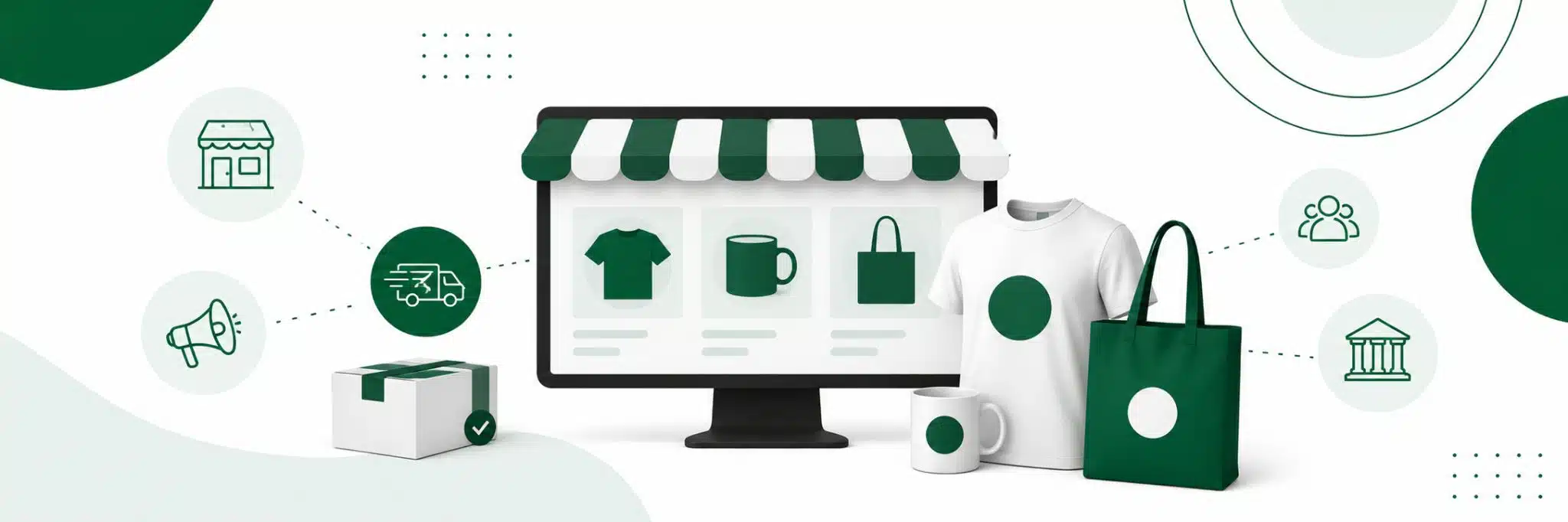

On-demand merch has changed the way businesses, creators, and organizations sell branded products. Instead of purchasing large amounts of inventory before knowing what customers want, products are made only after an order is placed.
That means fewer financial risks, lower storage costs, and greater flexibility. Whether you’re launching a clothing brand, running a school fundraiser, managing corporate merchandise, or building a creator business, on-demand fulfillment makes it easier to offer customized products without worrying about unsold stock. It gives organizations the freedom to scale, experiment with new ideas, and grow efficiently while keeping operations simple.
Key Takeaways
- On-demand merch eliminates the need to keep large inventories.
- It works well for brands, creators, schools, nonprofits, and businesses.
- Products are produced only after customers place an order.
- Businesses can expand product catalogs without warehouse space.
- It’s ideal for seasonal campaigns, events, and limited-edition merchandise.
- A reliable fulfillment partner ensures consistent quality and faster delivery.
What Is On-Demand Merch?
On-demand merch is a fulfillment model where products are decorated and shipped only after someone places an order. Instead of buying hundreds of items upfront, businesses keep little to no inventory and produce merchandise only when it’s needed.
This differs from the traditional inventory model, where businesses must estimate demand, purchase products in advance, store them, and hope they sell. If demand is lower than expected, businesses are left with unsold inventory that ties up cash and storage space.
The growing popularity of on-demand merch services comes from their ability to reduce financial risk while giving businesses the flexibility to launch new products quickly. As ecommerce continues to grow, more organizations are adopting this model to simplify operations and respond faster to changing customer demand.
Why On-Demand Merch Makes Sense for Modern Businesses
Business success today depends on agility. Customer preferences change quickly, and storing thousands of dollars’ worth of inventory can slow growth rather than support it.
On-demand fulfillment removes many of these challenges by producing merchandise only after a purchase is confirmed. Businesses avoid warehousing costs, improve cash flow, and reduce waste from unsold products. Lower startup costs also make it easier for entrepreneurs and small businesses to enter the market without significant financial investment.
The model also supports faster product launches because businesses don’t have to wait for large production runs before introducing new designs. As demand grows, fulfillment scales alongside the business without requiring additional storage or inventory management.
On-Demand Merch for Clothing Brands
For clothing brands, flexibility is often more valuable than inventory. Fashion trends change rapidly, making it difficult to predict which products will sell months in advance. On-demand merch allows brands to launch collections without committing to large production runs, reducing financial risk while keeping product offerings fresh.
Startups can test new designs, seasonal collections, and limited-edition releases without filling a warehouse with unsold apparel. As customer demand increases, successful products can continue selling without interruption.
Businesses can also expand into premium branded apparel using decoration methods like screen printing for bold graphics or embroidery for a more polished, professional finish. This gives clothing brands the flexibility to build diverse collections while maintaining consistent quality and efficient production.
On-Demand Merch for Ecommerce Businesses
Ecommerce businesses thrive on flexibility, making on-demand merch an ideal fulfillment model for online sellers. Whether you’re using Shopify, WooCommerce, Etsy, or Amazon, producing merchandise only after a customer places an order removes the burden of purchasing inventory upfront. Instead of managing warehouses, tracking stock levels, and handling unsold products, sellers can focus on marketing and customer growth.
This model also supports automation. Orders can flow directly from your ecommerce platform into production, simplifying fulfillment while reducing manual work. Businesses looking to streamline operations can integrate online stores with on-demand production, creating a seamless experience from purchase to delivery.
On-Demand Merch for Content Creators & Influencers
Creators no longer need thousands of followers—or thousands of dollars—to launch merchandise. YouTubers, streamers, TikTok creators, podcasters, artists, and online communities can all use on-demand merch to sell products without investing in inventory.
Popular creator merchandise includes branded apparel, embroidered hats, stickers, posters, and limited-edition collections released around content milestones or special events. Because products are made only after orders are received, creators can experiment with new designs without worrying about leftover inventory. Marketing materials and custom stickers and banners also help creators strengthen their personal brand during live events, conventions, and product launches.
On-Demand Merch for Corporate Teams
Businesses increasingly use on-demand merch to strengthen company culture and improve employee engagement. Instead of storing large quantities of apparel in multiple sizes, organizations can order branded products only when they’re needed.
This approach works particularly well for onboarding new employees, recruiting campaigns, trade shows, conferences, employee appreciation programs, and client gifting. Companies can easily distribute branded apparel, drinkware, bags, and promotional items while keeping inventory costs under control. Programs built around company swag and customized promo products help reinforce brand identity while creating memorable experiences for both employees and customers.
On-Demand Merch for Schools & Universities
Educational institutions regularly require customized merchandise for students, faculty, alumni, and community events. On-demand fulfillment makes managing these programs much easier by eliminating the need to store hundreds of garments between semesters.
Schools can create spirit wear, club apparel, athletic merchandise, graduation apparel, alumni products, and fundraising campaigns without committing to large inventory purchases. Since production only begins after orders are placed, schools reduce waste while offering more styles, colors, and sizes to their communities. Dedicated school spirit wear solutions make it easier for educational organizations to run merchandise programs year-round.
On-Demand Merch for Nonprofits & Community Organizations
Nonprofits often operate with limited budgets, making inventory management an unnecessary financial burden. On-demand merch allows organizations to raise funds while minimizing upfront costs.
Customized merchandise can support fundraising campaigns, awareness initiatives, volunteer appreciation, donor recognition, community outreach, charity walks, and special events. Instead of guessing demand, nonprofits produce merchandise only after supporters place orders. This approach keeps administrative work low while maximizing fundraising opportunities and allowing organizations to focus more resources on their mission.
On-Demand Merch for Agencies & Promotional Companies
Marketing agencies and promotional product companies frequently manage branded merchandise for multiple clients simultaneously. Maintaining inventory for every campaign quickly becomes expensive and difficult to manage.
On-demand fulfillment allows agencies to deliver customized merchandise without purchasing inventory for each client. White-label production, faster campaign execution, and consistent branding make it easier to support businesses of all sizes.
Agencies can also simplify production across different decoration methods by using professional contract decoration services while organizations requiring labor-compliant production can benefit from union contract services. The result is a scalable fulfillment process that supports multiple clients without increasing operational complexity.
On-Demand Merch vs Buying Inventory
Choosing between on-demand merch and traditional inventory can significantly impact your business’s profitability and flexibility. While inventory-based models have long been the standard, more businesses are moving toward on-demand fulfillment because it reduces financial risk and simplifies operations.
On-Demand Merch vs. Traditional Inventory
Discover how on-demand merchandising compares with traditional inventory management across key business factors.
| 📊 Factor | ✅ On-Demand Merch | 📦 Traditional Inventory |
|---|---|---|
| 💰 Upfront Investment | Low; products are manufactured only after a customer places an order. | High; inventory must be purchased before sales begin. |
| ⚠️ Risk | Minimal risk of unsold products. | Higher risk of excess, outdated, or slow-moving inventory. |
| 🏢 Storage | No warehouse or inventory management required. | Requires storage space, inventory tracking, and handling. |
| 🎨 Product Variety | Easy to expand your catalog without buying additional stock. | Limited by warehouse capacity and purchasing budget. |
| 💵 Cash Flow | Healthier cash flow with lower upfront spending. | Capital remains tied up in inventory until products are sold. |
| 📈 Scalability | Quickly adapts to changing customer demand. | Growth often requires larger inventory purchases and storage. |
| ♻️ Waste | Very little waste because products are made to order. | Unsold inventory frequently results in markdowns, write-offs, or disposal. |
On-demand merchandising minimizes financial risk by eliminating inventory costs and reducing waste, making it ideal for startups, creators, and growing brands. Traditional inventory can offer lower per-unit costs for high-volume sales but requires significantly more capital, storage, and inventory management.
For businesses focused on flexibility and long-term growth, on-demand fulfillment provides a much more efficient operating model.
Products You Can Offer Through On-Demand Merch
One of the biggest advantages of on-demand fulfillment is the ability to offer a wide product catalog without maintaining inventory. Businesses can continuously introduce new products while only producing items that customers actually purchase.
Popular on-demand merchandise includes:
- Custom T-shirts for retail brands and promotional campaigns
- Hoodies and sweatshirts for seasonal collections
- Professional polos for corporate teams
- Branded hats and caps
- Premium embroidered apparel for uniforms and employee wear
- Vibrant DTF transfers applied to cotton, blends, and performance garments
- Promotional products for events and marketing campaigns
- Custom patches for jackets, uniforms, and hats
- Stickers for branding and giveaways
- Large-format banners, signs, and displays using wide format printing
This flexibility allows businesses to diversify revenue while responding quickly to customer demand.
Common Mistakes Businesses Make
Switching to on-demand merch is straightforward, but businesses often make avoidable mistakes that limit results.
Many companies continue ordering inventory too early instead of validating demand first. Others launch dozens of products simultaneously, creating unnecessary complexity through too many SKUs. Weak branding and inconsistent artwork can also reduce customer confidence, even when product quality is high.
Another common mistake is choosing the lowest-cost supplier rather than evaluating reliability and print quality. Cheap production frequently leads to inconsistent results, delayed deliveries, and customer complaints. Finally, many businesses overlook the importance of fulfillment experience. Fast, accurate production and dependable shipping are just as important as attractive product designs.
How to Choose the Right On-Demand Merch Partner
Your fulfillment partner plays a major role in customer satisfaction and long-term business growth. Look beyond pricing and evaluate the complete service offering.
Start with consistent product quality and multiple decoration methods, including screen printing, embroidery, DTF, and specialty applications. This provides greater flexibility as your merchandise program grows.
Reliable fulfillment, responsive customer support, and ecommerce integration also improve operational efficiency by reducing manual work and minimizing order errors.
Scalability is equally important. Whether you’re fulfilling one order or thousands, your production partner should maintain consistent quality and dependable turnaround times. Businesses experiencing seasonal spikes or event deadlines can benefit from rush services, while companies planning larger promotional campaigns should ensure their provider can support bulk orders without compromising quality.
Choosing a partner with experience, production capacity, and reliable support allows businesses to grow confidently while delivering a better customer experience.
To Wrap Up
On-demand merch gives businesses the flexibility to grow without the financial burden of inventory. Whether you’re a clothing brand, creator, school, nonprofit, or corporate team, producing merchandise only after an order is placed helps reduce risk, improve cash flow, and simplify operations. Shirt.co supports this model with reliable on-demand fulfillment, integrated online stores, company swag solutions, screen printing, embroidery, DTF decoration, promotional products, and scalable production services. By partnering with an experienced fulfillment provider, businesses can launch products faster, maintain consistent quality, and focus on growth instead of managing inventory.
FAQs
Who should use on-demand merch?
On-demand merch is ideal for clothing brands, ecommerce businesses, creators, schools, nonprofits, corporate teams, sports organizations, and promotional product companies that want to avoid inventory costs.
Is on-demand merch only for clothing brands?
No. Businesses can sell apparel, promotional products, patches, hats, stickers, banners, drinkware, and many other customized products through on-demand fulfillment.
Can schools use on-demand merch?
Yes. Schools frequently use on-demand merch for spirit wear, athletic teams, student clubs, alumni merchandise, and fundraising campaigns without purchasing inventory upfront.
Is on-demand merch profitable?
Yes. It reduces inventory expenses, improves cash flow, minimizes waste, and allows businesses to expand product offerings with lower financial risk.
How do creators sell on-demand merch?
Creators connect an online store to an on-demand fulfillment provider. When fans place orders, products are automatically produced and shipped without the creator holding inventory.
What’s the difference between on-demand merch and bulk orders?
On-demand merch produces products after each sale, while bulk orders involve manufacturing larger quantities at once for events, retail inventory, or corporate programs.
What products can businesses sell with on-demand merch?
Popular products include T-shirts, hoodies, polos, hats, embroidered apparel, promotional products, patches, DTF-decorated garments, stickers, banners, and branded accessories.
How does on-demand fulfillment work?
Customers place orders online, production begins automatically, merchandise is decorated, packed, and shipped directly to the customer without requiring businesses to manage inventory.
Does on-demand merch reduce inventory waste?
Yes. Since products are only made after they’re sold, businesses avoid overproduction, dead inventory, and unnecessary storage costs.
How do I choose the right on-demand merch partner?
Look for consistent quality, multiple decoration methods, reliable fulfillment, ecommerce integration, responsive customer support, and the ability to scale as your business grows.