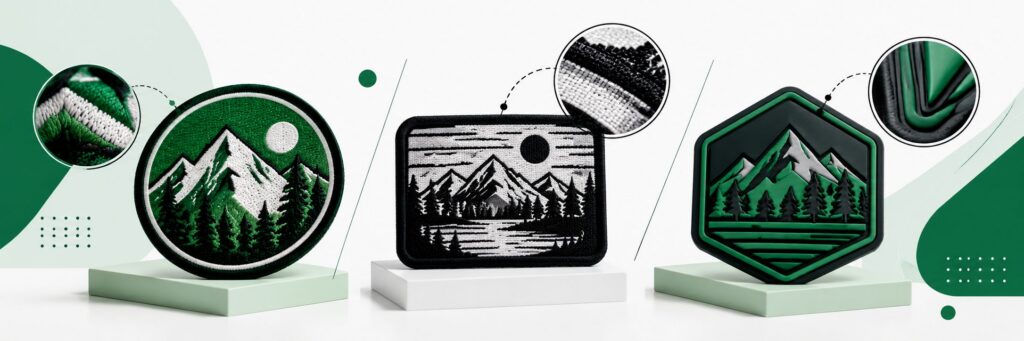

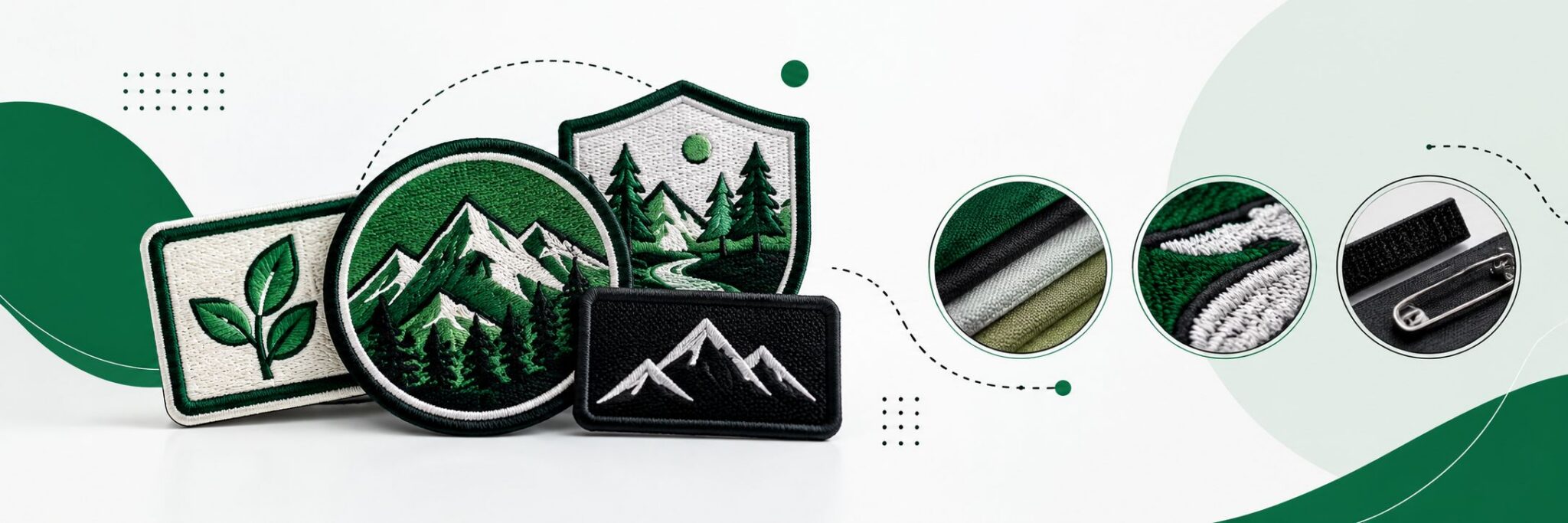

Custom patches are a simple way to add branding, identification, style, or personality to apparel and accessories. From classic embroidered designs to modern PVC and woven options, patches are available in many materials, shapes, finishes, and attachment methods.
The right patch depends on more than just appearance. You also need to consider the garment, artwork details, expected wear, application method, and quantity you need. This guide explains the main types of custom patches, their materials and backing options, common uses, and how to choose the right option for your project.
What Are Custom Patches and How Do They Work?
Custom patches are decorated pieces of fabric, rubber, leather, or other materials made with a specific design, logo, text, or artwork. They can be attached to clothing, hats, bags, uniforms, jackets, and other products.
A typical patch production process starts with artwork preparation. The design is then adapted to the selected patch material and production method. Depending on the patch type, the design may be embroidered, woven, molded, printed, engraved, or otherwise finished.
The final patch can also be customized with different borders and backing options.
What Can You Customize on a Patch?
Depending on the production method, you can usually customize:
- Patch size and shape
- Colors
- Logo or artwork
- Text and lettering
- Border style
- Backing method
- Material
- Overall finish
Simple artwork often works well across several patch types. Designs with very small text or fine details may require a flatter construction, such as a woven or printed patch.
Where Are Custom Patches Used?
Custom patches are commonly used on:
- Company uniforms
- Team apparel
- Hats and caps
- Jackets and outerwear
- Workwear
- Backpacks and bags
- Club and organization apparel
- Retail merchandise
- Event apparel
- Promotional products
They can also complement other decoration methods. For example, businesses may combine patches with custom embroidery services when creating a broader branded apparel program.
Types of Custom Patches: Embroidered, Woven, PVC, and More
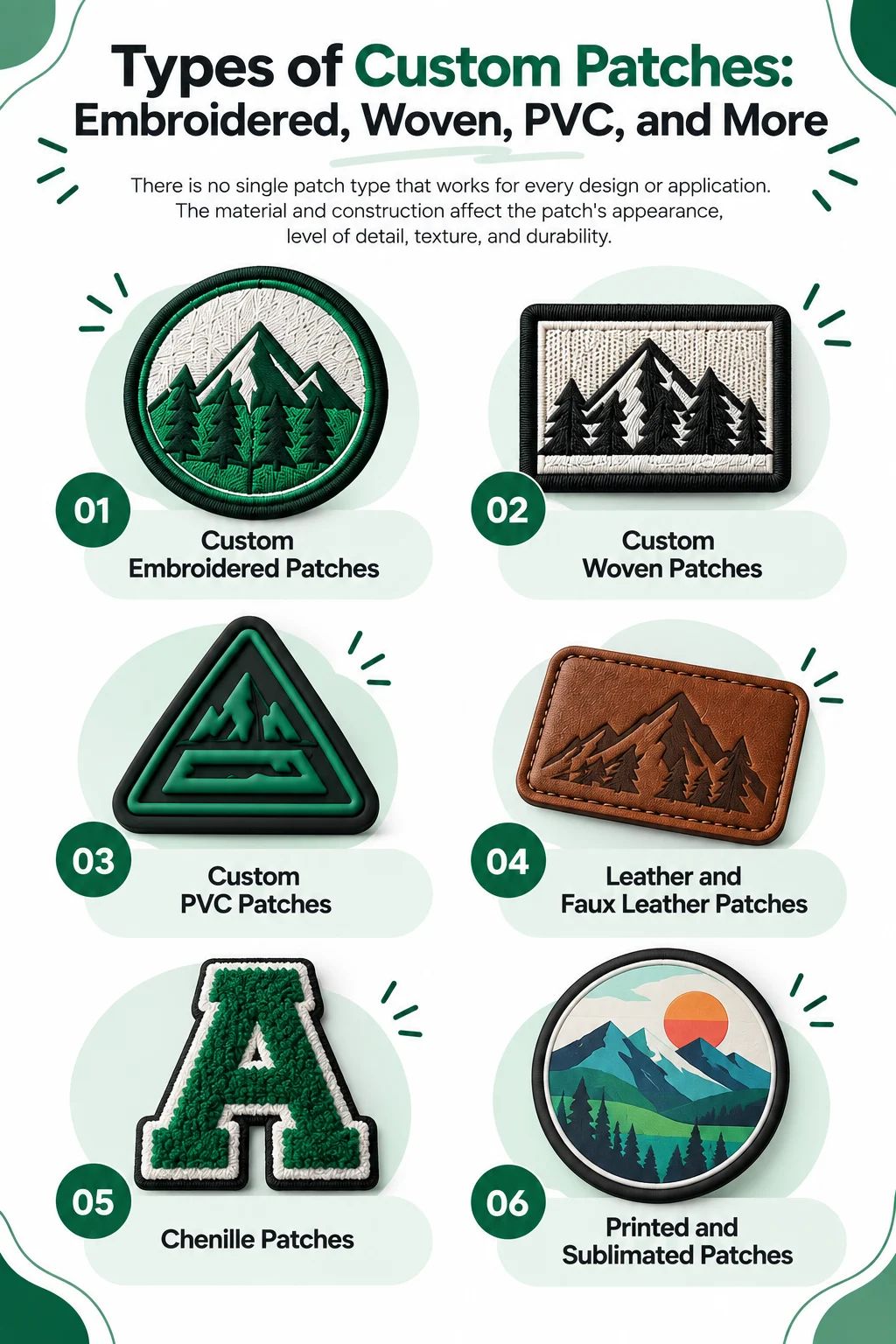
There is no single patch type that works for every design or application. The material and construction affect the patch’s appearance, level of detail, texture, and durability.
Custom Embroidered Patches
Custom embroidered patches use stitched thread to create the design. The raised thread gives them a traditional, textured appearance that works particularly well for uniforms, jackets, hats, and branded apparel.
Embroidery is a good choice when you want a classic patch look. It can also work well for logos and designs where texture is part of the desired appearance.
However, very small lettering or highly detailed artwork may be better suited to another patch construction.
Custom Woven Patches
Custom woven patches use thinner threads woven closely together. This creates a flatter surface that can reproduce smaller lettering and finer details more clearly than traditional embroidery.
Woven patches are useful for logos, labels, names, and detailed designs where a clean, flat appearance is important.
Custom PVC Patches
Custom PVC patches are made from flexible synthetic material and offer a distinctly modern appearance. They are commonly used for outdoor apparel, workwear, sports gear, bags, and other products exposed to demanding conditions.
PVC is particularly useful when you want a bold design with a durable, flexible construction. It can also be produced with raised or recessed elements for additional visual depth.
Leather and Faux Leather Patches
Leather patches provide a premium and understated appearance. Designs can be embossed, debossed, engraved, or otherwise applied to the leather surface.
They are often used on denim, hats, beanies, bags, and lifestyle apparel. Leather-style patches can be especially effective for brands that want a simple logo treatment rather than a highly colorful design.
Chenille Patches
Chenille patches are made with soft, raised yarn that creates a fuzzy and highly textured appearance. They are strongly associated with varsity, collegiate, and vintage-inspired apparel.
Their bold texture makes them useful for large letters, numbers, team names, and statement designs.
Printed and Sublimated Patches
Printed and sublimated patches use printing rather than relying entirely on stitched construction. This makes them useful for designs containing gradients, detailed illustrations, or photographic-style imagery.
They can be considered when the artwork contains visual details that would be difficult to reproduce with thread alone.
For shoppers comparing different construction methods and finishes, exploring premium patches online can help provide a better understanding of available patch options.
Custom Patch Backing Options: Iron-On, Sew-On, Velcro, and Adhesive
The front of a patch determines much of its appearance, but the backing determines how it attaches to the garment or product.
Choosing the right backing is important because an option that works for a casual jacket may not be appropriate for a heavily used uniform.
Custom Iron-On Patches
Custom iron-on patches use a heat-activated backing that attaches to fabric when pressure and heat are applied correctly.
They are convenient for many apparel applications and can make installation easier. However, application requirements can vary by fabric, so it is important to follow the manufacturer’s instructions.
For garments that experience frequent or heavy use, additional stitching may provide extra security.
Custom Sew-On Patches
Custom sew-on patches are attached directly to the garment with thread. This creates a strong and permanent attachment and makes sew-on patches a practical choice for uniforms, workwear, jackets, and frequently washed garments.
They require more installation work than iron-on patches but can provide a dependable long-term attachment.
Velcro or Hook-and-Loop Patches
Velcro patches are designed to be attached and removed repeatedly. They can be useful for tactical gear, organizational apparel, work equipment, and other applications where patches need to be changed.
The removable design also allows organizations to use different patches on the same garment or product.
Adhesive-Backed Patches
Adhesive backing provides a temporary attachment option. It can be useful for events, short-term promotions, displays, or applications where permanent attachment is not required.
Adhesive options should be selected according to the intended surface and expected use.
Merrowed vs. Laser-Cut Borders
The border is another important part of a patch.
A merrowed border creates a traditional raised edge and is commonly used with simple shapes such as circles, rectangles, and other standard designs.
Laser-cut or hot-cut borders create a flatter, cleaner edge and can be useful for intricate or irregular shapes.
How to Choose Custom Patches for Clothing and Different Applications
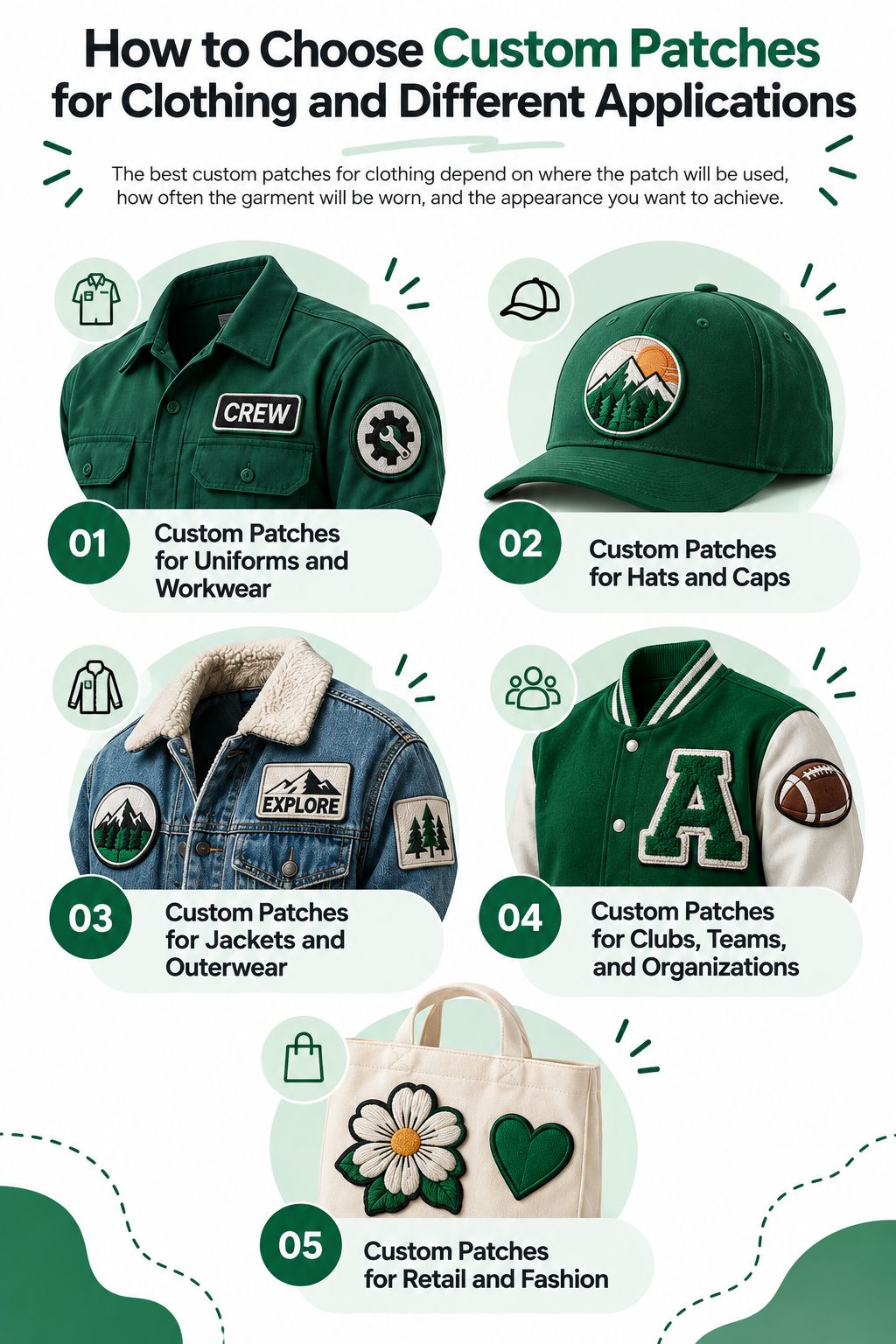
The best custom patches for clothing depend on where the patch will be used, how often the garment will be worn, and the appearance you want to achieve.
Custom Patches for Uniforms and Workwear
Uniform patches often need to withstand regular wear and washing. Sew-on or durable patch constructions may be appropriate for work environments where garments are used frequently.
Company logos, employee identification, department names, and organization badges can all be incorporated into a uniform patch.
Custom Patches for Hats and Caps
Hats provide a smaller decoration area, so artwork needs to remain readable at a reduced size.
Embroidered, woven, and leather patches are common options for caps. The patch shape and dimensions should be selected according to the available front panel area.
Custom Patches for Jackets and Outerwear
Jackets offer more room for creative patch placement. Patches can be positioned on the chest, sleeve, front, or back depending on the garment and design.
For frequently worn outerwear, consider both the patch construction and attachment method before ordering.
Custom Patches for Clubs, Teams, and Organizations
Patches can help identify members and create a consistent appearance across a group. They are commonly used by sports teams, clubs, organizations, and community groups.
For larger programs, ordering consistent patches in bulk can also simplify apparel production.
Custom Patches for Retail and Fashion
Fashion brands can use patches as both branding elements and decorative features. Patches can add visual interest to denim jackets, hats, bags, sweatshirts, and other apparel.
Leather, chenille, woven, and embroidered options can each create a different aesthetic.
Quick Guide to Choosing a Patch Type
🧵 Patch Type Guide by Requirement
Find a patch option based on appearance, application, attachment, and design needs.
| Your Requirement | Suitable Option | Main Benefit |
|---|---|---|
| Classic textured appearance | Embroidered | Traditional stitched look |
| Small details or lettering | Woven | Flat and detailed construction |
| Outdoor or rugged applications | PVC | Flexible and durable construction |
| Premium casual appearance | Leather | Distinctive finish |
| Varsity-inspired design | Chenille | Soft, raised texture |
| Convenient apparel application | Iron-on | Easy heat application |
| Permanent attachment | Sew-on | Strong attachment |
| Removable identification | Velcro | Easy to change |
Start with your design, application, and attachment needs. Then choose the patch material and backing that best match the desired look, durability, and ease of use.
How to Design and Order Custom Patches
Once you know which patch type fits your project, the next step is preparing the artwork and order specifications.
Start With the Artwork
Use clear artwork whenever possible. A high-quality logo or design gives the patch manufacturer more information to work with.
Consider the final patch size before adding small text or intricate elements. Details that look clear on a computer screen may become difficult to reproduce at a small physical size.
Choose the Right Material
Match the material to the design and intended application.
For example, embroidery can provide a classic textured look, while woven construction may be better for fine lettering. PVC can suit rugged applications, while leather can create a more premium appearance.
Select the Backing and Border
Decide whether the patch should be:
- Iron-on
- Sew-on
- Velcro
- Adhesive-backed
You should also consider whether a merrowed or laser-cut border better fits the design.
Decide on Quantity and Size
Your order quantity can influence production requirements and overall project planning. Uniform programs, retail collections, teams, and organizations may need consistent patches across many garments.
If your project involves multiple apparel decoration methods, bulk printing services can be relevant when planning larger production runs.
Review Artwork Before Production
Before approving a larger order, check:
- Final dimensions
- Colors
- Text readability
- Border style
- Backing type
- Overall design proportions
- Placement requirements
Taking time to review these details can help prevent avoidable production issues.
What to Look for in a Custom Patch Provider
When comparing providers, look beyond the basic price. Consider the available patch materials, backing options, artwork support, production consistency, order quantities, and turnaround expectations.
A provider that can also support other apparel decoration needs may be useful when a project involves multiple products. For example, screen printing can be considered alongside patches when a design needs to appear directly on the garment rather than on a separate patch.
Custom Patches vs. Other Apparel Decoration Methods
Custom patches are one option among several ways to decorate apparel. Understanding the differences can help you select the right method for each design.
Custom Patches vs. Direct Embroidery
Direct embroidery places the design directly onto the garment. A patch is produced separately and then attached to the garment.
Patches can provide greater flexibility when the same design needs to be used across different garments or products. Direct embroidery may be preferable when you want the design permanently integrated into the garment itself.
For projects that require direct stitching, custom embroidery services may be worth considering.
Custom Patches vs. Screen Printing
Screen printing applies ink directly to the garment. It is commonly used for larger graphics, text, and designs that need to cover a broader print area.
Patches provide a different visual effect and can add texture or dimension to apparel. For direct garment graphics, screen printing services offer a separate decoration approach.
Patches vs. Custom Stickers
Stickers are better suited to promotional and non-fabric surfaces, packaging, equipment, and other applications where an adhesive graphic is appropriate.
Patches, by contrast, are designed primarily for apparel and fabric-based products. Businesses that need both options may also explore custom sticker printing services as part of a broader branding strategy.
Patches vs. Other Promotional Products
Not every promotional campaign needs an apparel patch. Some businesses may benefit from printed merchandise, accessories, signage, or other branded products.
If a campaign requires several types of branded merchandise, custom printed promo products can complement a patch-based apparel program.
Common Custom Patch Mistakes to Avoid
A few planning mistakes can affect the final appearance or performance of a patch.
Choosing a Material Without Considering the Garment
A patch should work with the fabric and intended use. Consider whether the garment is lightweight, heavy-duty, frequently washed, or exposed to outdoor conditions.
Making Text Too Small
Small text can become difficult to read when converted into a physical patch. If text is important, make sure the final patch size provides enough room for it.
Using Too Much Detail
Highly detailed artwork may need a patch construction that can reproduce fine elements clearly. Simplifying unnecessary details can often improve the final result.
Selecting the Wrong Backing
Consider how the patch will be used before choosing the backing. A temporary adhesive may not be suitable for a frequently washed work uniform, while Velcro may be unnecessary for a permanently branded jacket.
Ordering Without Checking the Final Specifications
Always confirm the size, colors, artwork, backing, border, and quantity before production.
For organizations operating under specific apparel or labor requirements, specialized production support may also be relevant. For example, union contract services can be considered when apparel orders involve union-specific requirements.
Conclusion
Custom patches offer a flexible way to decorate apparel, identify teams and organizations, and build a recognizable brand presence. From custom embroidered patches and woven designs to PVC, leather, chenille, and printed options, each construction provides a different combination of appearance and functionality.
Before ordering, consider the artwork, patch material, garment, backing, border, expected wear, and quantity. Choosing the right combination from the beginning can help create patches that look appropriate for their intended use and perform as expected over time.
Custom Patch FAQ
What is the difference between embroidered and woven patches?
Embroidered patches use raised stitched thread, creating a textured appearance. Woven patches use thinner threads in a flat construction, which can make small details and lettering easier to reproduce.
Are custom iron-on patches durable?
Iron-on patches can provide a convenient attachment method for many garments. Their durability depends on the garment, application process, care instructions, and quality of the backing. For demanding applications, additional stitching may provide added security.
Are sew-on patches better than iron-on patches?
The choice depends on the application. Sew-on patches provide a strong permanent attachment, while iron-on patches offer a more convenient installation method for suitable garments.
What type of patch is best for hats?
Embroidered, woven, and leather patches can all work well on hats. The best choice depends on the design, available space, desired appearance, and level of detail.
What type of custom patch is best for detailed designs?
Woven or printed patches can be useful for designs with fine details, small lettering, gradients, or complex artwork. The appropriate option depends on the design and desired finish.
Can custom patches be made in different shapes?
Yes. Custom patches can be produced in many shapes, including standard geometric forms and more intricate custom outlines. Border selection can also affect how the final shape looks.
Can I order custom patches in bulk?
Yes. Bulk orders are commonly used for uniforms, teams, organizations, retail merchandise, events, and recurring apparel programs. Larger orders should be planned around consistent artwork, sizing, materials, and production requirements.
How should I prepare artwork for custom patches?
Start with clear, high-quality artwork and consider the final patch dimensions. Avoid unnecessary fine details and make sure important text remains readable at the intended size. For embroidery-specific projects, see this guide on How to Make Custom Embroidery Patches for additional guidance.