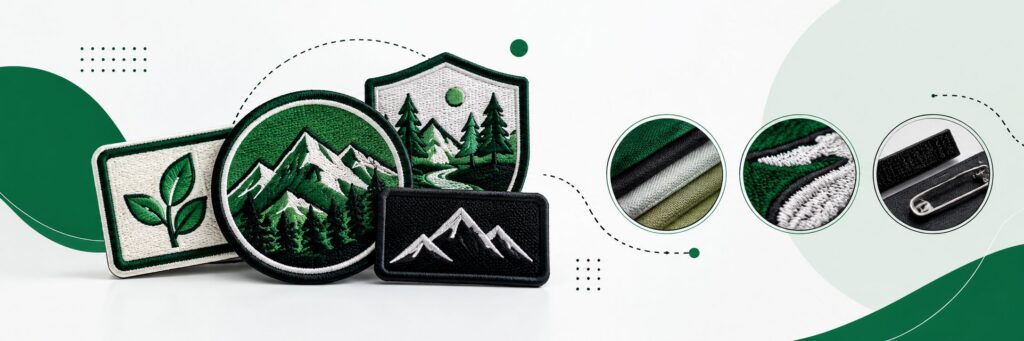


Choosing the right patch is about more than picking a design you like. The material and construction can affect the patch’s appearance, level of detail, durability, thickness, and suitability for different garments or products.
The three most common options are embroidered, woven, and PVC patches. Each has distinct advantages, so understanding the differences can help you make a more informed buying decision.
Whether you are ordering patches for uniforms, branded apparel, hats, bags, workwear, or outdoor gear, this guide compares embroidered vs woven vs PVC patches to help you find the right fit for your project.
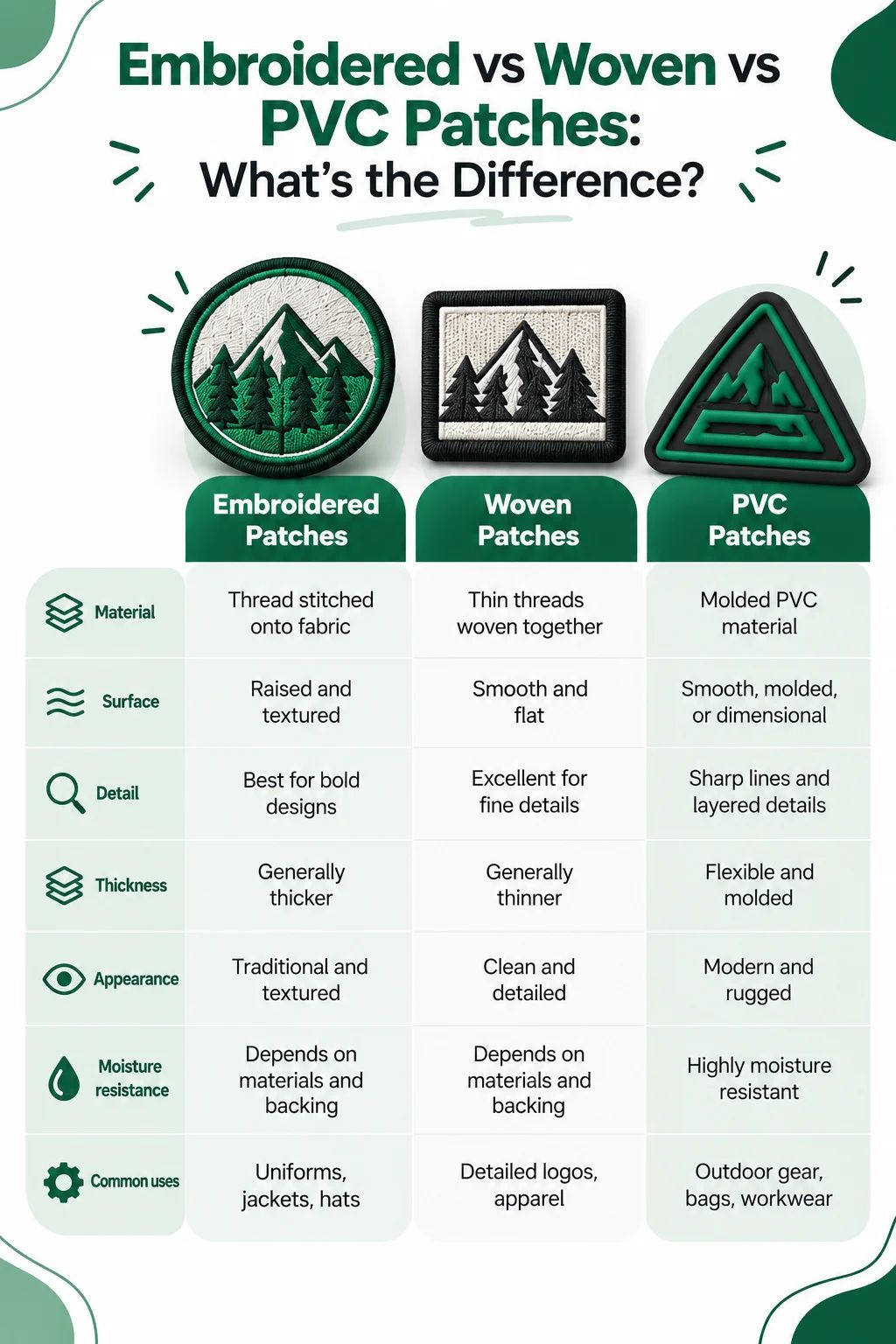
Embroidered vs Woven vs PVC Patches: What’s the Difference?
Although all three options can turn artwork into a recognizable patch, they use different materials and production methods. Those differences create distinct textures, appearances, and performance characteristics.
🧵 Embroidered vs. Woven vs. PVC Patches
Compare materials, detail, appearance, durability, and common uses.
| Feature | Embroidered Patches | Woven Patches | PVC Patches |
|---|---|---|---|
| Material | Thread stitched onto fabric | Thin threads woven together | Molded PVC material |
| Surface | Raised and textured | Smooth and flat | Smooth, molded, or dimensional |
| Detail | Best for bold designs | Excellent for fine details | Sharp lines and layered details |
| Thickness | Generally thicker | Generally thinner | Flexible and molded |
| Appearance | Traditional and textured | Clean and detailed | Modern and rugged |
| Moisture resistance | Depends on materials and backing | Depends on materials and backing | Highly moisture resistant |
| Common uses | Uniforms, jackets, hats | Detailed logos, apparel | Outdoor gear, bags, workwear |
Choose embroidered patches for a classic textured look, woven patches when fine detail matters, and PVC patches when you need a modern molded appearance with strong moisture resistance.
Embroidered Patches
Embroidered patches use stitched thread on a fabric base. The thread creates a raised surface that gives the patch a classic, textured appearance.
This construction works particularly well for bold logos, simple lettering, team designs, uniforms, jackets, and organizations that want a traditional patch style.
Woven Patches
Woven patches use thinner threads woven closely together. Instead of creating the raised texture associated with embroidery, weaving produces a flatter surface.
The flatter construction can make woven patches a practical choice for intricate artwork, fine lines, and smaller lettering that may be difficult to reproduce clearly with heavier embroidery.
PVC Patches
PVC patches are made from molded PVC material rather than textile thread. They can feature raised, recessed, or layered elements and have a distinctive smooth finish.
PVC is often considered for outdoor apparel, bags, workwear, and gear because the material is well suited to applications where moisture resistance and easy cleaning are important.
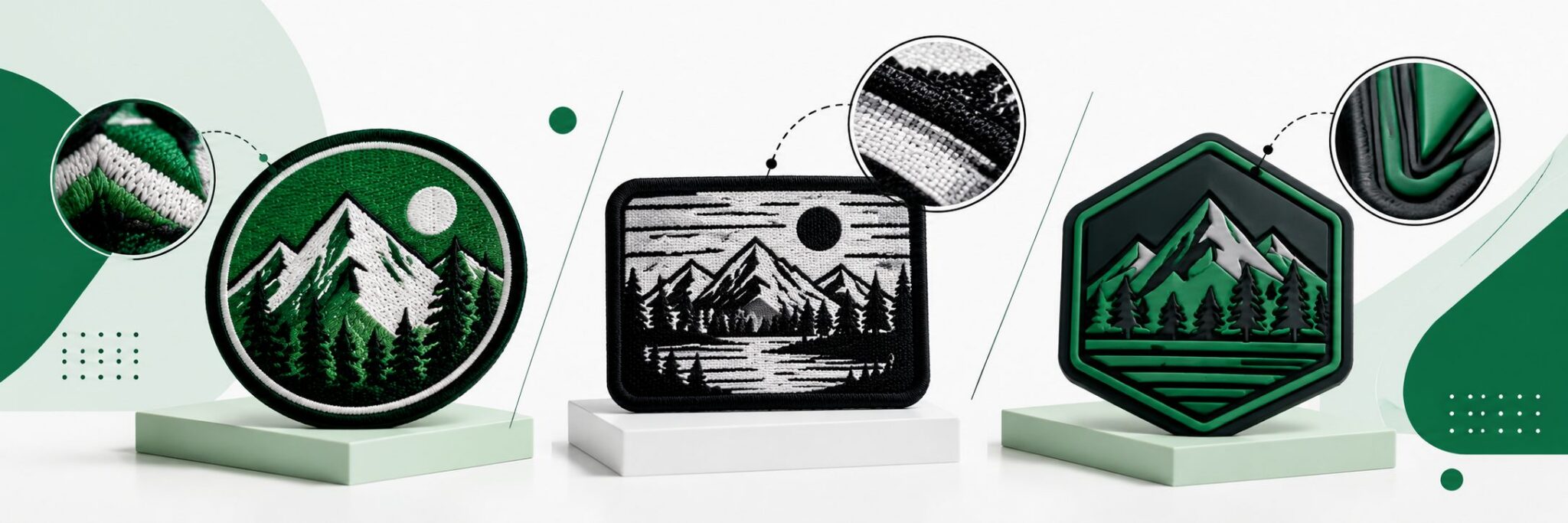
Embroidered vs Woven Patches: Which Works Better for Your Design?
The choice between embroidered and woven patches often comes down to the artwork and the appearance you want.
When Embroidered Patches Make Sense
Embroidered patches are a strong option when you want a traditional, dimensional appearance. The raised thread gives logos and designs more texture.
They are commonly used for:
- Uniforms
- Jackets
- Hats
- Team apparel
- Club and organization apparel
- Workwear
- Traditional branded garments
Bold shapes and relatively simple artwork generally work well with embroidery. Very small text and extremely fine details may require adjustments to remain clear.
When Woven Patches Are a Better Fit
Woven patches use thinner threads, allowing more detail to be represented on a flat surface.
They can be useful for designs containing:
- Small lettering
- Fine lines
- Detailed logos
- Intricate illustrations
- Multiple small design elements
If the visual goal is a clean and relatively thin patch rather than a heavily textured surface, woven construction may be worth considering.
Embroidered Patches vs. Woven Patches for Clothing
For clothing, both options can work well, but they create noticeably different results.
Embroidered patches provide more texture and a classic appearance. Woven patches offer a flatter profile that can better suit detailed artwork and designs where small elements need to remain visible.
The garment itself also matters. Consider the fabric weight, placement, how often the garment will be washed, and whether you want the patch to become a prominent visual feature.
Match the Patch Construction to the Artwork
One of the most important decisions should happen before production: choosing a construction that can reproduce the artwork effectively.
A simple, bold logo may work particularly well with embroidery. A detailed logo with small lettering may be better suited to a woven construction.
If you are also planning embroidered garments, professional custom embroidery services can help maintain consistent branding across apparel and patch applications.
Woven vs PVC Patches: Detail, Durability, and Appearance
Woven and PVC patches can both reproduce detailed designs, but their finished appearance is very different.
When Woven Patches Are the Better Fit
Woven patches have a textile appearance and a smooth surface. They can be a good fit for apparel brands, detailed logos, labels, and garments where a fabric-based finish is preferred.
They are particularly useful when the design depends on fine lines or small lettering without needing a raised, molded appearance.
When PVC Patches Make Sense
PVC patches offer a distinctly different look. Their molded construction can create raised or recessed details that stand out from the garment.
They can be useful for:
- Outdoor apparel
- Bags
- Equipment
- Workwear
- Outdoor gear
- Products exposed to moisture
PVC is also easy to wipe clean, making it useful for applications where the patch may encounter dirt, rain, or other environmental conditions.
Woven Patches vs. PVC Patches for Detailed Designs
Both woven and PVC patches can reproduce detailed artwork, but they express that detail differently.
Woven patches use threads to create a flat textile surface. PVC uses molded material to create defined shapes, layers, and dimensional elements.
Consider the desired brand aesthetic. A woven patch can feel more like part of the garment, while PVC can create a more technical or rugged appearance.
Consider Where the Patch Will Be Used
The environment should influence your decision.
A patch for an indoor uniform does not necessarily need the same material characteristics as one used on outdoor equipment. Similarly, a fashion garment may prioritize appearance and texture, while workwear may require greater resistance to moisture, dirt, and repeated use.
PVC vs Embroidered Patches: Durability, Style, and Use Cases
PVC and embroidered patches are particularly different in appearance and construction.
PVC vs Embroidered Patches for Outdoor Use
PVC is often considered for outdoor applications because its molded material is resistant to moisture and easy to clean.
Embroidered patches can also be used outdoors, but their textile construction may interact differently with moisture, dirt, and wear.
For outdoor gear, consider how the entire patch system will perform, including the patch material, backing, attachment method, and garment or product material.
PVC vs Embroidered Patches for Clothing
Embroidered patches provide a familiar textile appearance. They can make a uniform, jacket, or hat feel more traditional and customized.
PVC creates a smoother and more modern appearance. It can work particularly well when the design calls for raised details or a rugged visual style.
Neither construction is automatically suitable for every garment. The best option depends on the design, intended use, and appearance you want.
Which Patch Type Fits Common Applications?
🧵 Patch Options by Application
Compare patch types based on where they will be used and what matters most.
| Application | Options to Consider | Main Consideration |
|---|---|---|
| Uniforms | Embroidered | Traditional branded appearance |
| Detailed logos | Woven | Fine lines and small lettering |
| Outdoor gear | PVC | Moisture resistance and easy cleaning |
| Workwear | Embroidered or PVC | Environment and durability |
| Fashion apparel | Woven or embroidered | Desired visual finish |
| Bags and accessories | PVC or woven | Style and intended use |
| Hats | Embroidered or woven | Design detail and texture |
Match the patch type to the application first. Consider the desired appearance, artwork detail, working environment, moisture exposure, and durability before choosing a patch style.
These are starting points rather than strict rules. Artwork, material, attachment method, and intended use should all be considered before ordering.
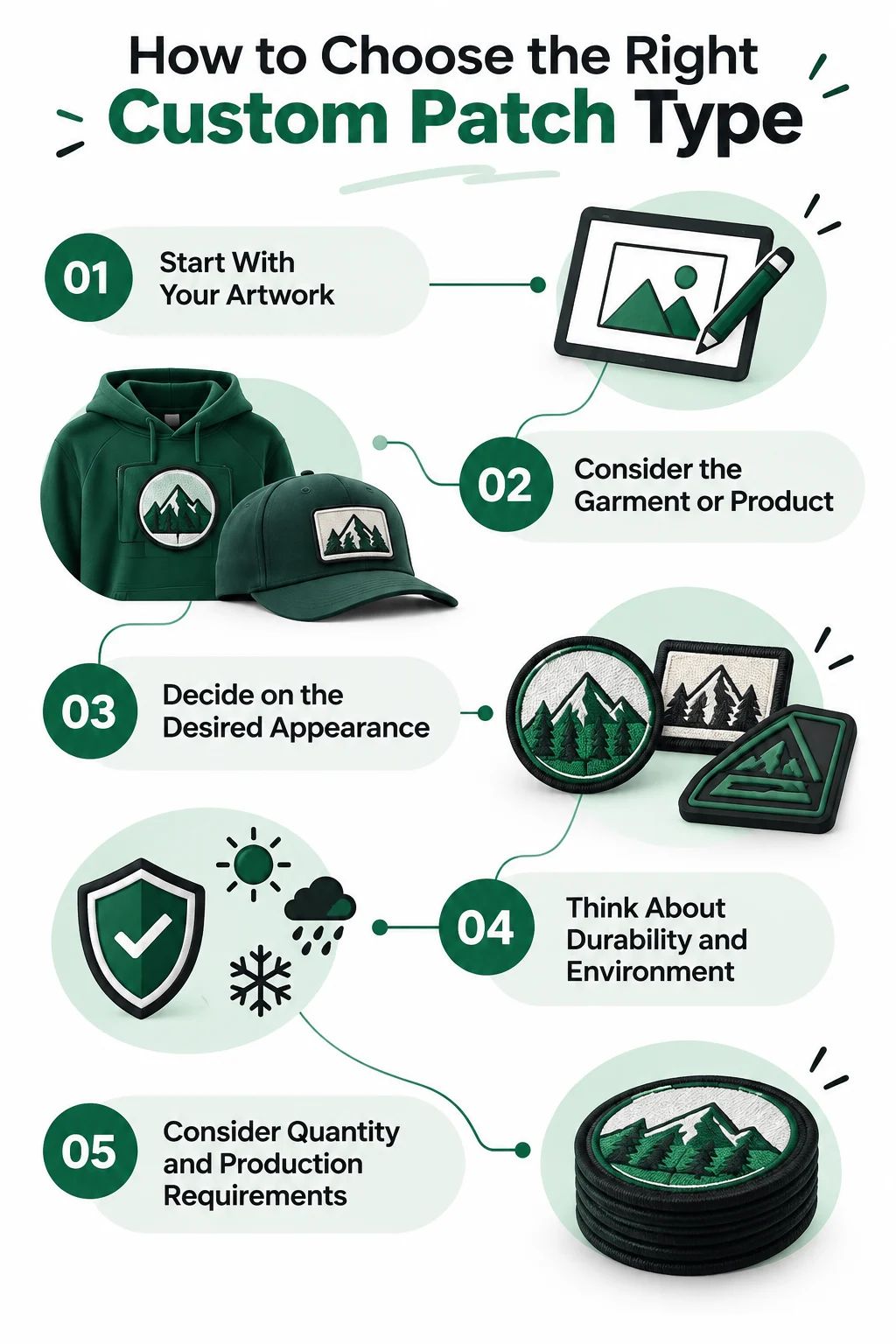
How to Choose the Right Custom Patch Type
Once you understand the differences, narrowing down your options becomes easier.
1. Start With Your Artwork
Look closely at the design before choosing a patch construction.
Ask:
- Does the design contain small text?
- Are there very thin lines?
- Is the artwork bold and simple?
- Does the design need raised or dimensional details?
- How large will the finished patch be?
Artwork that looks clear on a computer screen may need adjustments when reproduced at a smaller physical size.
2. Consider the Garment or Product
Think about where the patch will go.
A jacket, hat, T-shirt, uniform, bag, and outdoor piece of equipment can have very different requirements. The material, thickness, flexibility, and attachment method should work with the item.
3. Decide on the Desired Appearance
Your visual preference can help narrow the options:
- Raised and traditional: Consider embroidered patches.
- Flat and detailed: Consider woven patches.
- Molded and dimensional: Consider PVC patches.
This simple approach can help you avoid choosing a patch solely based on price or appearance in a product catalog.
4. Think About Durability and Environment
Consider how the finished product will be used.
Will it be worn occasionally or frequently? Will it be exposed to rain or dirt? Will it be washed regularly? Will it be used for outdoor activities or demanding work?
Answering these questions can help identify which patch construction makes practical sense.
5. Consider Quantity and Production Requirements
Quantity can also affect your buying decision. A small custom order and a large apparel program may have different production requirements.
If you are ordering patches alongside a larger apparel run, planning the artwork, quantities, garment types, and production requirements together can make the process easier. Bulk printing services can also be useful when patches are part of a larger branded apparel order.
Embroidered vs Woven vs PVC Patches: How Much Do They Cost?
There is no single price for embroidered, woven, or PVC patches. Pricing depends on the specifications of the order and the production process.
What Influences Custom Patch Pricing?
Common factors include:
- Patch size
- Order quantity
- Artwork complexity
- Number of colors
- Patch construction
- Custom shape
- Backing type
- Production setup requirements
A larger patch can require more material and production time. Similarly, a complex design may require more preparation than a simple logo.
Why Bulk Quantities Can Affect Cost
Larger orders can change the economics of production because setup and preparation costs may be distributed across more pieces.
If you need patches for uniforms, teams, events, or a growing apparel brand, determine your expected quantity before requesting pricing.
Instead of comparing a single unit price, ask for pricing based on your actual order size and specifications.
What to Ask Before Ordering
Before placing an order, ask the supplier:
- Which patch construction is recommended for the artwork?
- What backing options are available?
- What is the minimum order quantity?
- What sizes can be produced?
- What is the expected production timeline?
- Can I review an artwork proof?
- Are there setup or mold charges?
- How should the finished patches be attached?
These questions can help you compare options based on the complete order rather than price alone.
How to Prepare Artwork for Custom Patches
Good patch production starts with artwork that is suitable for the chosen construction.
Keep Important Details Clear
Avoid making important design elements unnecessarily small. Fine lines and tiny lettering may need to be simplified depending on the final patch size and construction.
Strong contrast can also help important elements remain visible.
Choose the Patch Construction Before Finalizing the Artwork
The same artwork can look different when produced as embroidery, woven fabric, or molded PVC.
If you know the patch type before finalizing the artwork, you can make design decisions around its characteristics. This may include adjusting text size, simplifying shapes, or changing fine details.
For a closer look at the production process, see how to make custom embroidery patches.
Embroidered vs Woven vs PVC Patches: Quick Decision Guide
Still deciding? Start with the purpose of your patch.
Choose embroidered patches when:
- You want a traditional, textured appearance.
- Your artwork is bold and relatively simple.
- The patch is intended for uniforms, jackets, hats, or classic apparel.
- Texture is an important part of the design.
Choose woven patches when:
- Your artwork contains fine details.
- Small lettering needs to remain readable.
- You want a flatter surface.
- You prefer a textile-based appearance.
Choose PVC patches when:
- The application may encounter moisture or dirt.
- You want a molded or dimensional appearance.
- The patch will be used on outdoor gear, bags, or demanding workwear.
- Easy cleaning is an important consideration.
The right choice ultimately depends on how the patch will look, feel, and perform in its intended application.
Where Custom Patches Fit Into a Larger Apparel Order
Custom patches are often just one part of a broader apparel branding project.
A company may use patches alongside printed shirts, embroidered uniforms, promotional products, or other branded items. Coordinating these elements can help maintain a consistent visual identity.
For example, screen printing services may be appropriate for larger printed graphics, while embroidered garments can complement patches on uniforms, jackets, or hats.
Businesses and organizations may also combine patches with custom printed promo products when building merchandise or promotional campaigns.
For larger programs, consider the complete order rather than treating each product as a separate project. This can make it easier to coordinate artwork, quantities, garment selection, and production schedules.
Other branded items, such as stickers, can also complement apparel campaigns. custom sticker printing services can provide another way to extend the same branding across packaging, promotional materials, and customer giveaways.
Organizations with specialized apparel requirements may also benefit from dedicated union contract services when their projects involve specific purchasing or production arrangements.
Conclusion
Choosing between embroidered vs woven vs PVC patches starts with understanding what each construction is designed to do.
Embroidered patches provide a classic, textured appearance and work well with bold designs. Woven patches offer a flatter finish that can accommodate fine details, while PVC patches provide a molded look and are well suited to applications where moisture resistance and easy cleaning matter.
Before ordering, consider your artwork, garment or product, desired appearance, environment, quantity, and budget. Once those factors are clear, you can choose a patch construction that fits both your design and its intended use.
If you are ready to turn your artwork into custom patches, Shirt.co offers patch and apparel production options that can support different branding and garment needs.
Frequently Asked Questions About Custom Patch Types
What is the difference between embroidered, woven, and PVC patches?
Embroidered patches use stitched thread to create a raised, textured surface. Woven patches use thinner threads to create a flatter and more detailed surface. PVC patches use molded material and can provide smooth, raised, or recessed details.
Are woven patches better than embroidered patches for detailed designs?
Woven patches can be a good option for detailed designs because their thinner threads create a flatter surface. They can help preserve fine lines and smaller lettering that may be difficult to reproduce with heavier embroidery.
Are PVC patches waterproof?
PVC itself is highly resistant to water and moisture. However, the overall performance of a finished patch can also depend on its backing, attachment method, and the material it is applied to.
Which patch type is best for clothing?
There is no single option for every garment. Embroidered patches can suit traditional uniforms and jackets, woven patches can work well for detailed designs, and PVC patches can be useful for rugged or outdoor apparel.
Are embroidered patches more durable than woven patches?
Both can provide long-lasting results when properly produced and attached. Actual durability depends on construction quality, materials, attachment method, garment use, washing, and environmental exposure.
Can custom patches be used on hats, jackets, and bags?
Yes. Custom patches can be applied to many types of apparel and accessories. The best patch construction and backing depend on the material, shape, placement, and intended use of the item.