
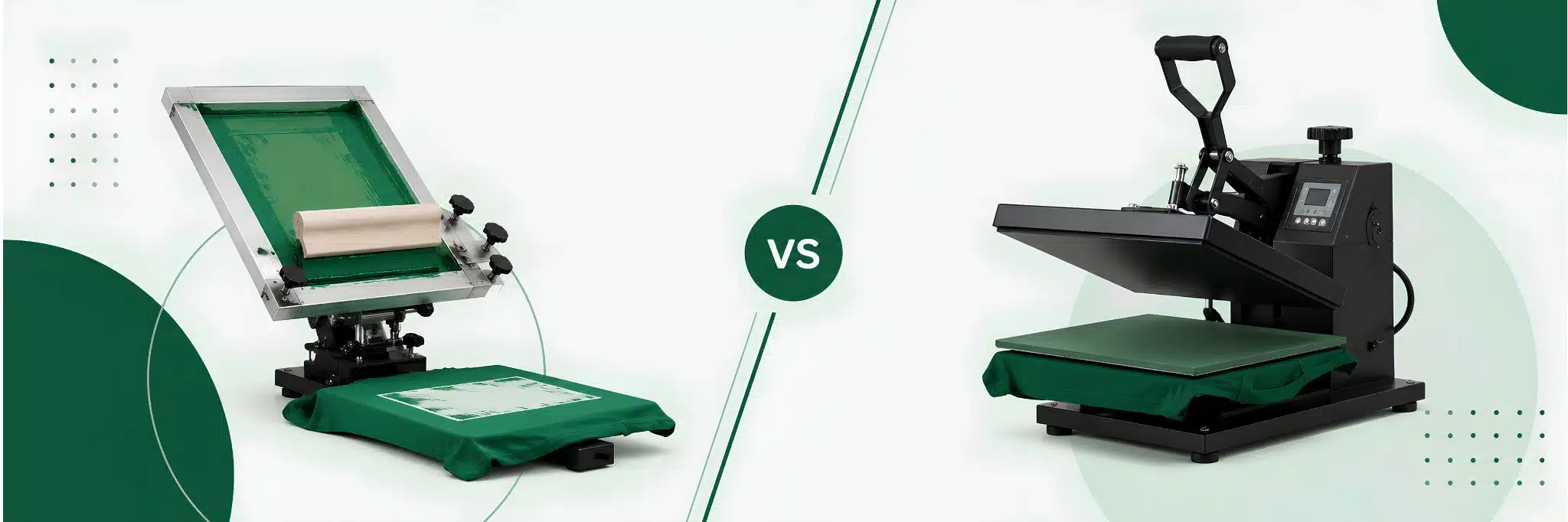

The screen printing vs. heat press debate actually depends on what you really want. If you want to print 100 cotton t-shirts with the same two-color logo, the better choice is usually screen printing. The reason is simple: it’s cheaper for bulk orders and lasts through multiple washes.
But if you need a small batch of full-color hoodies or personalized jerseys, this is better handled with heat press printing. Why? Because it’s faster and more flexible for custom designs. The screen printing works by forcing ink through a prepared mesh onto a garment, which creates a vibrant and long-lasting design.
The heat press printing, on the other hand, works by applying heat transfer to a garment at the right time, pressure, and heat. In this way, the design permanently bonds with the material, whether it’s a fabric, ceramic, or metal.
This guide helps you choose between heat press and screen printing. It breaks down the differences based on costs, durability, fabric compatibility, and other factors to help you choose the right method. So, let’s get rid of the dilemma of screen print vs heat press.
Screen Printing vs Heat Press: A Quick Walkthrough for Each Method
Before we dive into a full-blown comparison between heat transfer and screen printing methods, a quick walkthrough is essential. Each method uses a different technique for how your design gets printed to your t-shirt, hoodie, or other garment.
With the custom t-shirt printing market heading towards a significant 9.82 billion by 2030, the decision involves high stakes. And, the choice of printing method can make or break your dreams. So, let’s begin by answering “what is heat press?” and “what is screen printing?” as well as how each of them works to make the right decision.
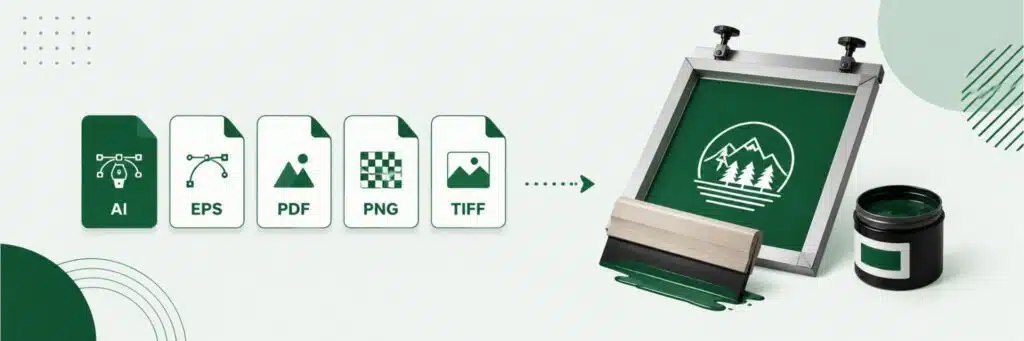
Screen printing is a method that uses screens to apply your artwork or logo to a garment. The screen stencils are woven mesh stencils with microscopic openings to allow ink to pass through. It allows for highly detailed, professional prints.
On the other side, heat press is a kind of printing method in which heat and pressure play a vital role in applying a design to a fabric. It uses transfers or digitally printed transfer papers to apply the design onto the fabric.
How Heat Press Works
A heat press works by applying heat and pressure to transfer a design onto fabric. The design is usually printed on transfer paper, vinyl, sublimation paper, or special PET films before being pressed onto the garment.
The machine uses a heated platen to bond the design to the fabric surface for a specific amount of time and temperature.
This method is widely used for:
- Small custom orders
- Personalized apparel
- Sports jerseys with names and numbers
- Full-color graphics
- On-demand printing businesses
One of the biggest advantages in heat press is setup speed. It requires minimal setup and works well for short production runs. It also allows easy customization because every shirt can have a different design without extra setup costs.
However, heat press designs sit on top of the fabric rather than becoming part of the fibers, which may slightly affect softness and long-term durability depending on the material used.
How Screen Printing Works
Screen printing uses mesh screens, ink, and pressure to apply designs directly onto garments. It is often preferred for bulk production because it becomes more cost-effective at higher quantities.
Each color in the design requires a separate screen. Ink is pushed through the screen onto the fabric using a squeegee, and the garment is then cured with heat to permanently bond the ink into the fibers.
Screen printing is commonly used for:
- Bulk t-shirt orders
- Company uniforms
- Promotional apparel
- Large event merchandise
- Simple logo designs
The biggest advantage of screen printing is durability. Screen-printed designs typically last longer and remain soft because the ink becomes embedded into the garment. It is also highly efficient for large runs of identical designs.
The downside is setup time and cost. Creating screens for every color makes small custom orders less practical compared to heat press printing.
Cost Comparison: Real Numbers at Every Order Size
When comparing heat press vs screen printing, the biggest question is usually cost. Both methods can produce quality apparel, but the economics change dramatically depending on order size. A method that looks affordable for 10 shirts may become expensive at 500 units.
Understanding where costs shift helps print shops avoid overspending on labor, setup, and materials.
Startup Cost
The entry cost for heat press printing is much lower than screen printing. A beginner heat press kit typically costs between $200–$500, while professional swing-away presses range from $800–$1,500.
Screen printing requires more equipment from the beginning. DIY setups usually start around $500–$800, while professional multi-color screen printing systems can range from $2,000–$10,000+ depending on automation.
Material costs also differ:
- Heat press transfer paper or DTF transfers: $2–$5 per print
- Screen printing ink cost: often only a few cents per print after setup
The major breakeven point in the screen printing vs heat press comparison usually happens around 24–50 shirts. Beyond that range, screen printing becomes significantly cheaper per unit.
Differences Between Heat Press and Screen Printing Methods
Choosing between heat press vs screen print is not always simple. Both methods can produce high-quality apparel, but they work very differently during production. What performs perfectly for a small custom order may become inefficient for bulk production. Understanding these differences helps print shops avoid wasted material, slow turnaround times, and inconsistent print quality.
Below are the biggest differences between screen printing vs heat press methods and how each process behaves in real production environments.
Production Setup Process
Heat press printing requires very little setup. Once the artwork is prepared, the transfer can be pressed directly onto the garment within minutes. This makes it highly efficient for short runs and personalized orders.
Screen printing requires significantly more preparation because each color needs its own screen, setup alignment, and ink registration before production begins.
Best Order Quantity
One of the biggest differences in screen printing and heat press production is scalability. Heat press works best for small orders, custom apparel, and one-off designs because setup remains simple regardless of quantity.
Screen printing becomes more cost-effective as order sizes increase. Large bulk runs dramatically lower the cost per shirt once screens are prepared.
Design Flexibility
Heat press printing handles complex artwork much more easily. Full-color graphics, gradients, photo prints, and personalized names can all be produced without additional setup changes.
Screen printing performs best with simpler graphics and limited colors. Complex multi-color designs increase setup difficulty, production time, and registration challenges during printing.
Print Feel and Fabric Integration
Heat press designs typically sit on top of the garment surface because the transfer bonds externally onto the fabric. Depending on the material used, some transfers may feel slightly heavier or smoother.
Screen printing pushes ink directly into the garment fibers during curing. This creates a softer, more integrated feel that many brands prefer for retail apparel production.
Durability and Wash Resistance
Durability is one of the strongest advantages in the heat press vs screen print comparison. Properly cured screen prints often survive 50+ washes because the ink becomes embedded into the fabric itself.
Heat press durability depends heavily on transfer quality, adhesive strength, pressure consistency, and washing conditions after production.
Color Vibrancy and Detail
Heat press printing excels at producing vibrant full-color graphics with sharp detail because the artwork is digitally prepared before transfer. This makes it ideal for photo-quality designs and complex artwork.
Screen printing creates bold, highly saturated colors but may struggle with photographic detail unless advanced separation techniques are used during setup.
Material Compatibility
Heat press systems work across many materials including cotton, polyester, blends, performance fabrics, and even specialty garments. Modern DTF heat transfers increase compatibility even further.
Screen printing performs exceptionally well on cotton apparel but may require specialized inks and curing adjustments for synthetic or heat-sensitive fabrics.
Production Speed
For small batches, heat press production moves extremely fast because there are no screens to prepare. Operators can switch designs instantly between garments without stopping production.
Screen printing becomes faster during large production runs. Once setup is complete, automatic presses can print hundreds of identical garments very efficiently.
Customization Capabilities
Customization is where heat press printing dominates. Individual names, numbers, logos, and graphics can change from shirt to shirt without affecting production speed.
Screen printing struggles with variable-data customization because every design change may require new screens and additional setup time, making personalization much less practical.
Screen Printing vs Heat Press: Which One Should You Choose?
Choosing between heat press vs screen printing depends on three things: your order size, artwork style, and business model. A lot of people search things like:
- “Is screen printing better than heat press?”
- “Which lasts longer?”
- “What’s cheaper for small orders?”
- “Which works best for clothing brands?”
The answer changes based on what you actually sell.
If you print hundreds of identical shirts every month, screen printing usually gives better long-term value. But if you sell custom names, small batches, or one-off designs, heat press printing is often faster and easier to manage.
Here’s a quick decision matrix to simplify the screen printing vs heat press decision.
When to Choose Screen Printing
Screen printing works best when consistency, durability, and large production runs matter most. Once setup is complete, production becomes extremely fast and cost-efficient.
Choose screen printing if you need:
- 50+ shirts with the same design
- Long-lasting prints for retail apparel
- Bold streetwear graphics
- Specialty inks like puff or metallic
- Lower cost per shirt at scale
It is also the better choice for:
- Sports uniforms
- Corporate merch
- Event apparel
- Wholesale clothing brands
The biggest advantage in screen printing and heat press comparisons is durability. Properly cured screen prints can survive years of washing without major fading.
Best For: Clothing brands, bulk merch production, uniforms, retail apparel, and high-volume print shops.
When to Choose Heat Press
Heat press printing is built for flexibility. There’s almost no setup time, which makes it perfect for short runs and personalized apparel.
Choose heat press if you need:
- One-off custom orders
- Fast turnaround times
- Personalized names or numbers
- Full-color photo prints
- Small startup investment
Heat press is also ideal for:
- Etsy sellers
- Print-on-demand stores
- Small businesses
- Local creators
- Event-based custom apparel
In the heat press vs screen print discussion, heat press wins for customization and speed on smaller orders.
Best For: Small businesses, print-on-demand brands, personalized apparel sellers, and low-volume custom printing.
Conclusion
The screen printing vs heat press decision ultimately comes down to your production goals, budget, and customization needs. Screen printing remains the stronger choice for bulk orders, long-lasting prints, and large apparel runs where lower per-unit costs matter. On the other hand, heat press printing offers faster setup, easy personalization, and greater flexibility for short runs or one-off designs.
When comparing heat press vs screen printing, there is no universal winner. The right method depends on what you print, how much you print, and how quickly you need it delivered. Choosing the right process helps improve print quality, profitability, and customer satisfaction long-term.