

Chain stitching has made a remarkable comeback. From premium streetwear collections and luxury loungewear to varsity jackets, heavyweight denim, and elevated corporate merchandise, brands are increasingly embracing the textured, vintage-inspired aesthetic that only chain stitch embroidery can deliver. Its handcrafted appearance instantly adds authenticity, heritage, and perceived value to apparel.
However, many apparel brands and marketing teams fall in love with the look before considering the production realities behind it. The choice between hand and machine chain stitching affects far more than appearance—it influences scalability, consistency, turnaround times, labor costs, and long-term profitability.
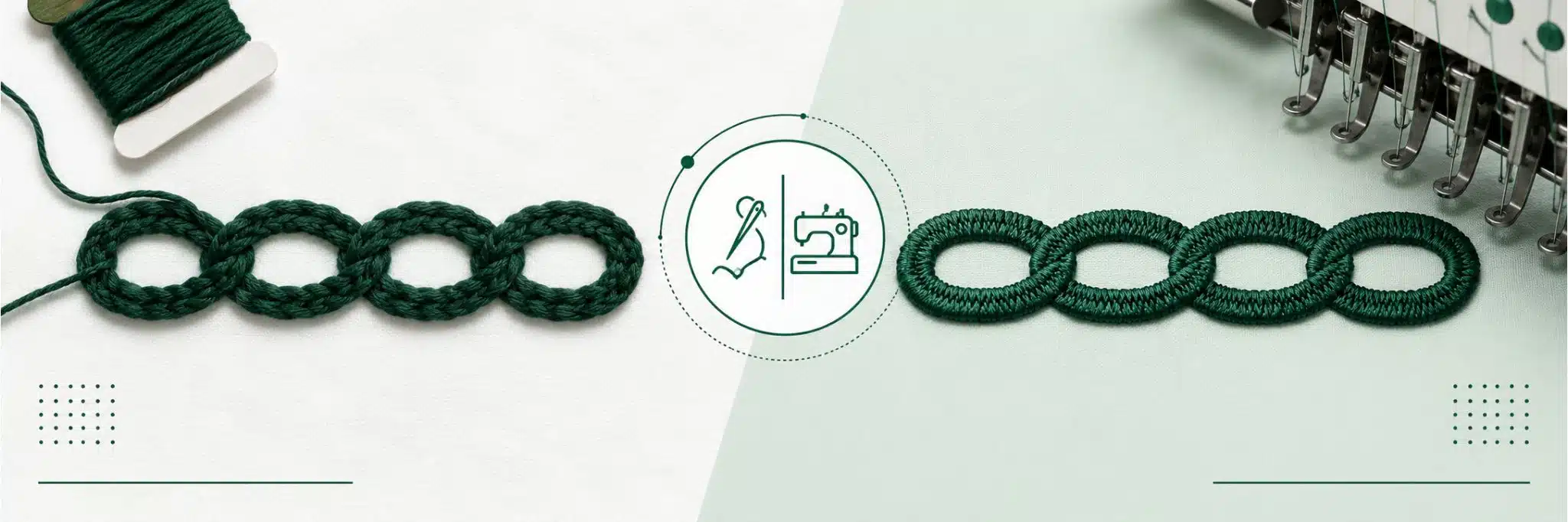
For startups producing limited-edition pieces, traditional hand chain stitching may offer unmatched artisanal character. But for growing apparel brands, retail programs, and large merchandise campaigns, commercial machine chain stitching provides the precision, repeatability, and production efficiency required to meet demand without sacrificing quality.
In this guide, we’ll break down the key differences between hand vs. machine chain stitching, compare their costs and capabilities, and help you determine which option best aligns with your brand’s production goals, budget, and growth strategy.
Quick Summary: Hand vs Machine Chain Stitch Embroidery
Hand vs machine chain stitch embroidery comes down to craftsmanship versus scalability. Hand chain stitching delivers a unique, artisan-made appearance ideal for one-off pieces and boutique projects, while machine chain stitch embroidery provides consistent quality, faster production, lower costs per unit, and the reliability growing apparel brands need for large-volume orders and commercial merchandise programs.
Understanding the Craft: What is Chain Stitch Embroidery?
Before comparing hand vs machine chain stitching, it’s important to understand what makes chain stitch embroidery so distinctive. Unlike traditional embroidery methods that create flat surfaces, chain stitching produces a textured, dimensional appearance that has remained popular for decades in workwear, varsity apparel, luxury fashion, and custom apparel embroidery.
Related: What Is Custom Embroidery?
The Anatomy of a Chain Stitch
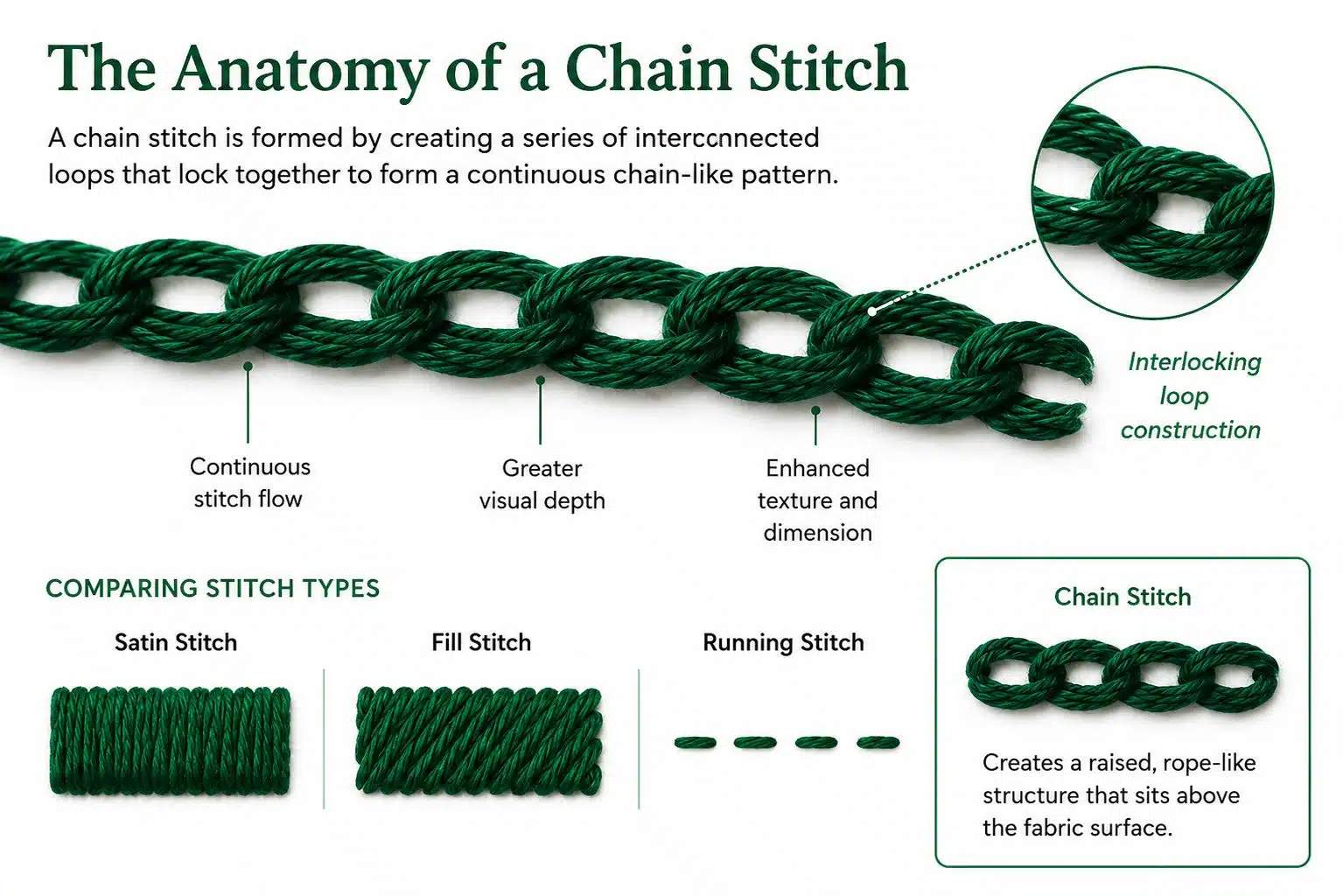
A chain stitch is formed by creating a series of interconnected loops that lock together to form a continuous chain-like pattern.
Unlike standard embroidery stitches such as:
- Satin stitches
- Fill stitches
- Running stitches
Chain stitches create a raised, rope-like structure that sits above the fabric surface.
Key characteristics include:
- Interlocking loop construction
- Continuous stitch flow
- Greater visual depth
- Enhanced texture and dimension
This unique construction gives chain stitching its instantly recognizable handcrafted appearance.
Why Brands Love the Chain Stitch Look
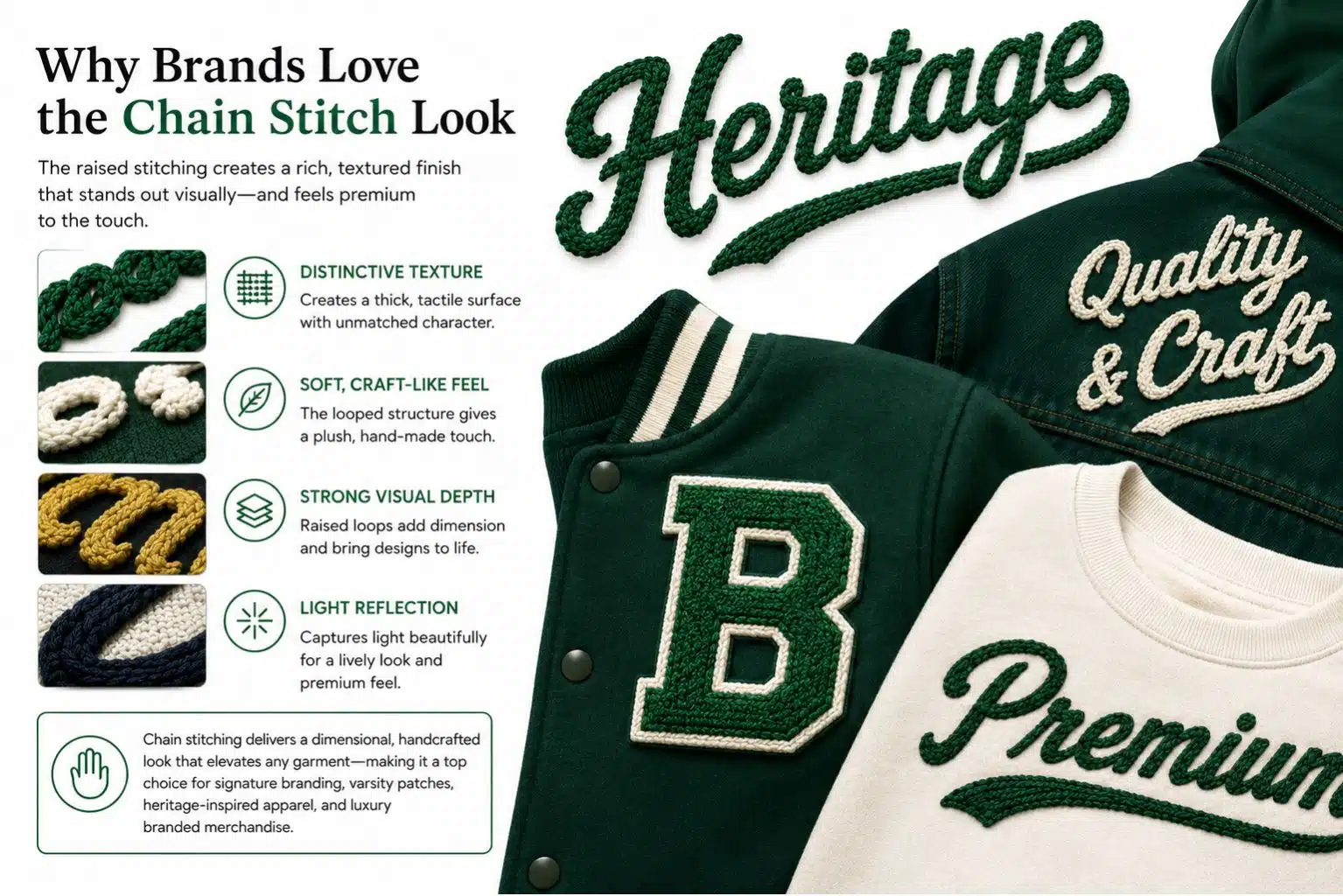
One of the biggest reasons for the resurgence of vintage chain stitch embroidery is its premium visual appeal.
The raised stitching creates:
- A distinctive textured surface
- A soft “carpet-like” appearance
- Strong visual depth
- Unique light reflection from different angles
When customers touch chain-stitched garments, they immediately notice the dimensional quality that separates it from standard embroidery. This elevated aesthetic makes chain stitching especially popular for:
- Premium streetwear
- Varsity jackets
- Denim collections
- Heritage-inspired apparel
- Luxury branded merchandise
Many brands incorporate this look alongside traditional embroidery programs offered through professional custom apparel embroidery services to create more distinctive product lines.
How Chain Stitch Embroidery Is Created
There are two primary methods used today.
Hand & Vintage Mechanical Chain Stitching
Traditional chain stitching is created using vintage machines such as:
- Singer chain stitch machines
- Cornely embroidery systems
These machines are controlled through a manual crank handle beneath the machine bed, allowing operators to guide the stitch direction by hand.
Benefits include:
- Artisan character
- Unique imperfections
- Vintage authenticity
Modern Commercial Machine Chain Stitching
Today’s commercial machine embroidery systems use computerized vector files to guide stitching automatically.
Advantages include:
- Consistent stitch quality
- Faster production speeds
- Repeatable results
- Scalable manufacturing
This precision is especially important for large-scale branded apparel programs and high-volume production runs. Many growing brands also rely on specialized contract embroidery partners to achieve chain stitch aesthetics while maintaining commercial efficiency and consistency.

Related: How To Make Custom Embroidery Designs?
Hand-Cranked / Manual Chain Stitching: The Artisan Approach
When comparing hand vs machine chain stitch embroidery, hand-cranked chain stitching represents the original craft that inspired today’s premium chain stitch aesthetic. Long before modern embroidery automation existed, artisans used specialized chain stitch embroidery machines to create highly textured designs one garment at a time.
How Hand Chain Stitching Works
Traditional chain stitch embroidery is created using vintage machines such as:
- Cornely embroidery machines
- Singer chain stitch machines
- Vintage hand-guided chain stitch systems
Unlike computerized embroidery equipment, these machines rely on a skilled operator who manually controls the stitch direction using a hand crank located beneath the machine bed.
The process typically involves:
- Loading the garment into the machine
- Guiding the fabric manually under a single needle
- Controlling stitch direction through the crank mechanism
- Building the design loop by loop
- Locking the final stitch to prevent unraveling
Because every movement is controlled by the operator, no two garments are ever completely identical.
Why Brands Love Hand Chain Stitch Embroidery
For certain niche apparel brands, the appeal of vintage chain stitch lies in its authenticity.
Unique Character
Every design contains subtle variations that make the garment feel handcrafted rather than mass-produced.
Benefits include:
- One-of-one appearance
- Artisan craftsmanship
- Vintage authenticity
- Heritage-inspired branding
Premium Perception
Hand-guided stitching often carries strong storytelling value, especially for:
- Luxury streetwear brands
- Heritage denim collections
- Limited capsule drops
- Artist collaborations
- Collectible merchandise
For brands selling exclusivity, these imperfections can become part of the product’s appeal.
The Production Challenges
While artisan chain stitching looks impressive, it introduces significant scaling limitations.
Extremely Slow Production
A single operator must manually guide every stitch.
Compared to commercial embroidery systems, production speed is dramatically lower.
This creates major bottlenecks for:
- Large launches
- Seasonal collections
- Wholesale programs
- Bulk merchandise orders
Brands planning large production runs often transition to specialized partners offering bulk custom apparel production because manual stitching simply cannot keep pace with growing demand.
Inconsistent Batch Results
Human involvement means variation is unavoidable.
Potential issues include:
- Slight logo positioning differences
- Inconsistent stitch density
- Uneven spacing
- Design variations across garments
While collectors may appreciate these differences, they can become problematic for companies requiring consistent branding.
The Structural Weakness of Traditional Chain Stitching
Perhaps the biggest drawback of traditional chain embroidery stitch construction is its reliance on a single continuous thread.
Because the loops are interconnected:
- One broken loop can affect the surrounding stitches
- A snag may cause sections of the design to unravel
- Poorly secured end stitches can compromise the entire artwork
If the final loop isn’t properly locked or backstitched, a single pull can begin unraveling the chain structure.
For this reason, many brands combine chain stitch aesthetics with modern production methods such as custom patches and appliqué solutions available through custom embroidered patches. These approaches preserve the visual appeal while improving durability and production efficiency.
Where Hand Chain Stitching Still Makes Sense
Hand chain stitching remains valuable for:
- Limited-edition releases
- Artist collaborations
- Heritage-inspired collections
- Luxury denim customization
- One-off personalization projects
However, for growing brands focused on consistency, scalability, and commercial efficiency, hand-guided chain stitch embroidery machine production often becomes difficult to sustain. Even many apparel brands that embrace vintage aesthetics eventually supplement their merchandise with branded promotional assets like custom banners and stickers while shifting garment production toward more scalable embroidery solutions.
Modern Commercial Machine Embroidery: Precision at Scale
Modern custom apparel embroidery has evolved into a highly automated, precision-driven production method designed for scalability and brand consistency. Unlike traditional hand techniques such as hand embroidery chain stitch, today’s commercial embroidery systems rely on digital workflows and multi-head machines that can reproduce the same design thousands of times with exact accuracy.
The Process: From Artwork to Digital Embroidery Execution
The journey begins with digitization, where artwork is converted into a machine-readable embroidery file. This step is critical because the quality of embroidery depends heavily on how well the design is translated into stitch instructions. During digitization, stitch types, direction, density, and layering are defined to ensure clean execution on fabric.
One of the most commonly referenced techniques in design structure is the chain stitch in embroidery, which visually resembles a series of looped connections.
In modern production, this is replicated using automated systems like a chain stitch embroidery machine, which simulates the flow and texture of traditional stitching while maintaining industrial speed and accuracy. The result is a refined finish often described as chain embroidery stitch, which adds depth and texture to logos, lettering, and decorative apparel elements.
Once digitized, the design is loaded into multi-head embroidery machines capable of running dozens of garments simultaneously. These machines ensure uniform output across large production batches, making them ideal for uniforms, corporate apparel, and merchandise programs.
The Pros: Why Machine Embroidery Works for Brands
One of the biggest advantages of machine embroidery is flawless consistency. Whether producing 10 units or 10,000, each item maintains identical stitching quality, ensuring brand guidelines remain intact across every piece.
This makes embroidery particularly valuable for large-scale programs such as corporate uniforms, promotional apparel, and team merchandise. Services like company swag and school spirit wear rely heavily on embroidery for durable, professional branding.
Another advantage is rapid turnaround capability. Multi-head systems allow high-volume production in compressed timelines, supporting fast fulfillment needs. Providers offering rush services often use optimized embroidery workflows to meet tight deadlines without compromising quality.
Finally, embroidery uses lockstitch-based construction, which creates highly durable designs that resist unraveling. Even if a thread is damaged, the structure remains intact due to its interlocking stitch pattern, making it more resilient than many surface printing methods.
The Cons: Design and Fabric Limitations
Despite its strengths, machine embroidery has limitations. Unlike hand vs machine chain stitch embroidery, where handwork offers organic imperfections and artistic variation, machine embroidery is highly structured and uniform. This can make designs feel less “artistic” or handcrafted.
Additionally, improper digitization can lead to stiff or overly dense stitching, especially on lightweight fabrics. Thin materials may pucker or distort if stitch density is not carefully adjusted. This is why expert digitizing is essential before production begins.
Machine embroidery remains one of the most reliable methods in apparel decoration. While it may lack the artistic irregularity of hand embroidery chain stitch, it excels in precision, durability, and scalability. For brands seeking long-term consistency and professional presentation, it remains a cornerstone of modern apparel decoration systems.
Hand vs. Machine Chain Stitch Embroidery Matrix
Related: How Much Does Custom Embroidery Cost?
Designing for the Needle: Art Preparation Tips
Creating artwork for chain stitch embroidery requires a different design mindset compared to digital printing methods. Whether you’re working with hand vs machine chain stitch embroidery or modern automation like a chain stitch embroidery machine, the way you prepare your design directly impacts the final stitched result.
Keep Lines Fluid
Embroidery works best when designs flow naturally. Smooth curves, cursive fonts, bold script typography, and continuous vector outlines translate beautifully into stitched textures. This is because the chain embroidery stitch forms a connected loop structure, which naturally follows flowing shapes. Simple, bold strokes allow the thread to build a clean and visually strong pattern on fabric. Logos with clean outlines or hand-drawn script styles often perform especially well in embroidered applications.
Avoid Tight Geometrics and Over-Detailing
Highly detailed artwork, tiny geometric shapes, or complex gradients often lose clarity when converted into thread-based designs. Embroidery is built on physical thread layering, not pixel blending, which means fine shading and micro-details can turn into cluttered or uneven stitching.
In cases where your design relies heavily on gradients, photo realism, or intricate shading, alternative decoration methods such as DTF transfers or screen printing may be more suitable. These methods preserve visual detail without the limitations of thread density.
Fabric Choice Matters
The foundation of embroidery success is fabric stability. Heavy, structured materials such as denim, canvas jackets, thick hoodies, and structured caps hold stitch density well and prevent fabric puckering. These fabrics provide a stable base that supports the tension created by dense stitching patterns in chain stitch embroidery.
On the other hand, lightweight or stretchy fabrics can distort under heavy thread loads, leading to uneven surfaces or design warping.
For brands exploring scalable apparel production, embroidery is often combined with other decoration methods such as screen printing, union contract services, and on-demand merch to create diverse product lines that balance durability, cost efficiency, and visual complexity.
Ultimately, understanding how chain stitch embroidery behaves on different fabrics and design styles helps ensure cleaner, more professional results across both hand-crafted and machine-produced apparel.
The Shirt.co Advantage
Building a modern apparel brand requires speed, consistency, and scalability. If you are running a sports league, growing a merchandise line, or upgrading your company’s corporate identity, relying on manual hand-stitching methods like traditional chain stitch embroidery can quickly limit production capacity, increase costs, and slow down delivery timelines.
While handcrafted techniques still have artistic value, they are not designed for high-volume commercial needs. Modern businesses need streamlined systems that support bulk production, quick turnaround, and consistent quality. That’s where scalable decoration solutions and integrated production services become essential for sustainable growth and long-term brand success. Shirt.co is a reliable partner for custom embroidery solutions to help apparel brands scale seamlessly.
FAQs
1. What happens if a chain stitch breaks? Will the entire design unravel?
Yes, this is the biggest vulnerability of a traditional chain stitch. Because the design is formed by a single, continuous thread looping into itself, breaking one loop can cause a domino effect. If caught on a sharp object or stressed during wash cycles, an entire line of embroidery can rapidly pull out. For custom retail merchandise, commercial manufacturers frequently use a specialized backing or lockstitched termination nodes to secure the ends and prevent catastrophic unravelling.
2. How should you wash garments that have custom chain stitch embroidery?
To preserve the unique, textured loops and prevent thread shrinkage, items should ideally be turned inside out and hand-washed in cold water using a mild, pH-neutral detergent. If machine washing is necessary, use a dedicated delicate/gentle cycle and place the garment inside a mesh laundry bag. Never wring out the embroidery and completely avoid the dryer; lay the garment flat to air-dry away from direct sunlight to stop the colors from bleeding or fading.
3. Which fabric weights work best for chain stitching, and which should be avoided?
Chain stitching places substantial structural tension on textiles because of its heavy, multi-layered thread density.
- Best Matches: Stable, heavyweight woven fabrics like raw denim, canvas jackets, wool blends, and thick cotton fleece.
- What to Avoid: Highly elastic, ultra-thin, or performance lightweight synthetics (like thin tri-blends or sheer silk). Without heavy stabilization, the dense looping pattern will cause severe puckering, warping, and fabric distortion around the design.
4. Can you turn a chain stitch design into a removable iron-on patch?
Absolutely. Converting chain stitch embroidery into custom patches is an excellent way to get the vintage look onto delicate garments without damaging them. The process involves stitching the design onto a heavy-duty twill canvas backing, cutting out the border, and applying a commercial heat-activated adhesive film (heat seal backing) to the rear side. This lets consumers safely iron or sew the heavy accent onto lighter hoodies, hats, or bags.
5. Why is chain stitch embroidery significantly more expensive than standard satin or tatami fills?
The cost premium boils down to specialized machinery and labor density. True heritage chain stitching uses vintage, single-needle directionally controlled machinery (like the historic Singer 114w103 or Cornely machines) where an artisan must manually steer a hand-crank beneath the workspace. It is a time-consuming craft akin to “drawing with a needle”. Even when adapted to modern computerized setups, the looping mechanism uses significantly more physical thread volume per square inch compared to flat satin stitches, raising both production time and material overhead.