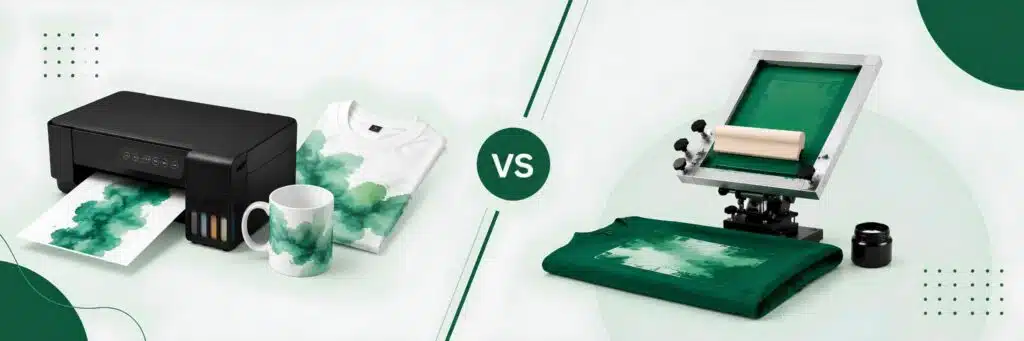

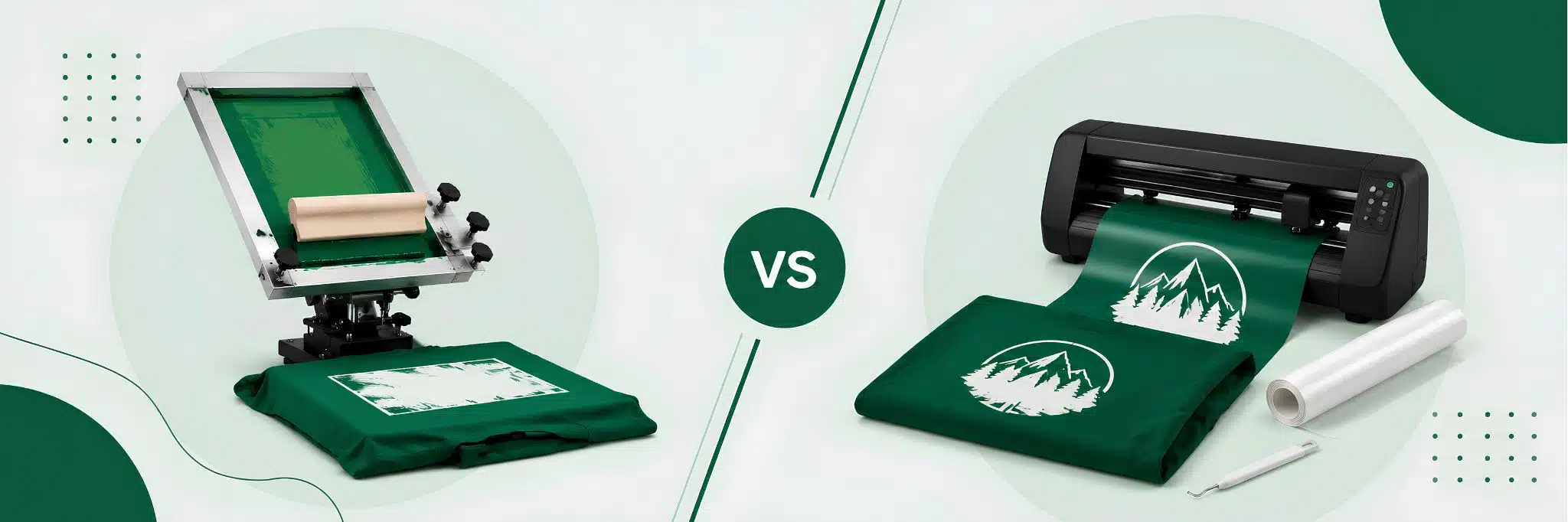

When starting a custom apparel business, one of the biggest decisions is choosing between screen printing and vinyl printing. Both methods are widely used in the t-shirt industry, but they work very differently and are suited for different types of orders.
For example, producing 300 shirts with vinyl designs can become extremely expensive and time-consuming. On the other hand, using screen printing for 8 personalized jerseys with different names and numbers is often impractical because of setup costs and production limitations.
Understanding where each method performs best can save time, reduce costs, and improve print quality. Here we are going to deep dive into the difference between screen printing and vinyl.
This guide breaks down how screen printing and vinyl printing work, their durability, pricing differences, ideal use cases, and how to confidently choose the right option for your business or custom apparel project.
Understanding What “Vinyl” Actually Means (HTV vs Adhesive Vinyl)
One of the biggest points of confusion in the screen printing vs vinyl debate is that the word “vinyl” actually refers to two completely different products.
For apparel printing, vinyl usually means HTV (Heat Transfer Vinyl). HTV is designed for fabrics and garments. It uses heat and pressure from a heat press to bond the vinyl onto t-shirts, hoodies, jerseys, tote bags, and other textiles.
Adhesive vinyl is completely different. Products like Oracal 651 or Oracal 631 use pressure-sensitive adhesive backing instead of heat.
These are mainly used for:
- Car decals
- Wall graphics
- Tumblers and mugs
- Windows and signage
- Hard surfaces
No heat press is required for adhesive vinyl.
That distinction matters because screen printing is only comparable to HTV apparel decoration — not adhesive craft vinyl.
So, throughout the rest of this article, “vinyl” refers specifically to HTV for apparel printing.
If your goal is decorating vehicles, walls, signs, or tumblers, adhesive vinyl is the correct material, and screen printing becomes a completely different conversation. If you need weatherproof hard-surface graphics, check out our Stickers and Banners Printing Services to get your brand noticed outside of apparel.
Understanding What Screen Printing Is
Before comparing screen printing and vinyl, it helps to understand what screen printing actually is and where it fits best in the real world.
Screen printing is a traditional apparel decoration method where ink is pushed through a fine mesh screen directly onto fabric using a stencil. Each color in the design requires its own separate screen, which is why setup becomes more involved for multi-color artwork.
Unlike vinyl, which cuts and presses material onto garments one piece at a time, screen printing applies liquid ink directly to the fabric surface and then cures it under high heat for long-lasting durability.
This method is widely used for:
- Bulk t-shirt printing
- Team uniforms
- Corporate merchandise
- Event apparel
- Streetwear brands
- Promotional products
Screen printing performs best when you need:
- Large order quantities
- Bold graphics
- Vibrant solid colors
- Durable prints on cotton or dark garments
It also supports specialty finishes like puff ink, metallic effects, glow-in-the-dark prints, and textured graphics that standard HTV cannot easily replicate.
One important thing to understand: screen printing is designed primarily for fabric and flat substrates. While industrial screen printing can also work on posters, packaging, glass, and signage, this article focuses specifically on apparel screen printing.
For large-volume production that demands retail quality, traditional methods still reign supreme. Learn more about how our high-volume contract screen printing services can bring your boldest designs to life with vibrant, long-lasting durability.
How Each Method Works — Process, Tools, and What It Feels Like
Understanding how screen printing and heat press (vinyl) actually work makes it much easier to decide which method fits your apparel project, budget, and production goals. While both decorate garments, the process behind them is completely different.
Screen Printing Process
Screen printing is a traditional apparel printing method built for durability and large production runs.
Here’s how it works:
The design is first separated by colors because every color needs its own mesh screen. A transparent film positive is then created and placed over a screen coated with light-sensitive emulsion. UV light exposes the screen and “burns” the design into the mesh.
Once prepared, ink is pushed through the open mesh areas using a squeegee directly onto the garment. Printers commonly use plastisol ink or water-based ink depending on the finish they want. After printing, the shirt moves through a conveyor dryer where heat permanently cures the ink.
Key screen printing tools include:
- Mesh screen
- Emulsion
- Film positive
- Squeegee
- Conveyor dryer
- Screen burning equipment
The result is a vibrant, durable print with excellent color opacity. The ink creates a slightly raised texture at first but softens naturally after washing.
HTV Process
HTV (Heat Transfer Vinyl) uses a completely different workflow focused on cutting and pressing rather than ink.
The design is created digitally, mirror-flipped, and sent to a vinyl cutter like a Cricut, Silhouette Cameo, or Roland cutter. The machine cuts the design into the vinyl sheet while leaving the clear carrier sheet intact.
Next comes weeding — removing all excess vinyl around the design and inside small cutouts. After weeding, the design is placed onto the garment and applied using a heat press at roughly 305–320°F for 10–15 seconds.
Once pressed, the carrier sheet is peeled away, leaving the vinyl bonded to the fabric through its polyurethane adhesive layer.
Key HTV tools include:
- Cricut or Silhouette cutter
- Heat press
- Carrier sheet
- Weeding tools
- Polyurethane HTV film
The final result is a clean, slightly raised film sitting on top of the garment.
The Feel Difference
Screen printing ink bonds more naturally with fabric fibers, creating a softer print that eventually feels like part of the shirt. HTV sits on top of the fabric as a thin layer, so it can feel slightly plastic or stiff on lightweight garments, although premium soft-stretch and flock vinyl reduce this effect significantly.
Why Weeding Matters in HTV
One major factor many beginners underestimate is weeding time.
Simple names, numbers, and bold shapes may only take 2–5 minutes to weed. But intricate logos, thin lettering, or detailed artwork with tiny cutouts can easily take 15–45 minutes per shirt.
That extra labor directly impacts vinyl pricing, especially for detailed multi-piece orders.
Screen Printing vs Vinyl: Decoding the Differences Between Them
Understanding the difference between screen printing and vinyl becomes much easier once you compare them side by side in real production situations. Both methods are popular in custom apparel printing, but they are built for very different types of projects.
Screen printing works best for bulk production, bold graphics, and long-term cost efficiency. HTV (heat transfer vinyl) is more suitable for personalization, small orders, names, numbers, and quick custom apparel jobs.
When comparing screen printing vs vinyl, the right choice depends on your order size, design complexity, budget, garment type, and how long you want the print to last.
Screen Printing vs Vinyl Cost
One of the biggest differences in screen printing vs vinyl cost is how pricing changes with quantity.
Screen printing has higher upfront setup costs because every color requires a separate screen, setup process, and ink preparation. For small orders, that setup cost gets divided across only a few garments, which makes the price per shirt higher.
However, once production volume increases, screen printing becomes extremely affordable per piece. That is why large businesses, schools, sports teams, and clothing brands usually choose screen printing for bulk orders.
HTV works differently. There are almost no setup fees. A design is digitally cut and heat pressed directly onto the garment.
This makes vinyl vs screen printing much more cost-effective for:
- Small runs
- Personalized apparel
- One-off custom shirts
- Sports jerseys with individual names
- Print-on-demand businesses
But as quantity increases, labor costs rise quickly because every shirt must be individually weeded, aligned, and heat pressed.
In simple terms:
- HTV wins for small custom orders.
- Screen printing wins for large production runs.
Screen Printing vs Vinyl Durability
When comparing screen printing vs vinyl durability, both methods can last a long time if properly produced, but they age differently.
Screen printing uses ink that bonds directly with the garment during curing. High-quality screen prints can survive dozens of wash cycles while maintaining strong color vibrancy. Over time, the print may soften naturally or develop slight vintage fading, which many people actually prefer.
HTV sits on top of the fabric as a thin polyurethane film. Premium heat transfer vinyl can still be very durable, especially for jerseys and athletic apparel, but it is more vulnerable to:
- Cracking
- Peeling
- Edge lifting
- Heat damage from improper washing
This becomes especially noticeable in htv vs screen printing jerseys where garments experience constant stretching and repeated washing.
For long-term bulk apparel durability, screen printing usually performs better. For personalized sportswear and short-run apparel, HTV still delivers strong results when applied correctly.
Color Performance
Color handling is another major difference between screen printing vs heat transfer vinyl.
Screen printing produces extremely vibrant colors because thick ink layers sit directly on top of the garment.
It performs exceptionally well on:
- Dark shirts
- Cotton garments
- Hoodies
- Heavy fabrics
- Streetwear apparel
It also supports specialty inks like:
- Metallic
- Puff
- Glitter
- Glow-in-the-dark
- Reflective finishes
HTV also creates bold, opaque colors because the vinyl itself is pre-colored.
Specialty vinyl options include:
- Glitter HTV
- Flock HTV
- Holographic vinyl
- Reflective HTV
- Puff vinyl
However, multi-color designs become more difficult with HTV because each color usually requires separate cutting and layering.
For bold simple graphics, both methods work well. For high-volume multi-color production, screen printing is usually more efficient.
Pro-Tip on Multi-Color Limitations: If you love the ease of a heat press but your design has too many colors or gradients for standard HTV, you don’t have to settle for complex weeding. Modern DTF (Direct-to-Film) Transfers allow you to press high-resolution, full-color artwork onto almost any fabric without color separation bottlenecks.
Print Quality and Detail
When comparing vinyl printing vs screen printing t-shirts, print quality depends heavily on the artwork style.
Screen printing performs best for:
- Bold logos
- Large graphics
- Strong solid colors
- Fashion prints
- Retail apparel
It creates a softer long-term feel because the ink eventually settles into the garment after repeated washing.
HTV produces extremely sharp edges and clean lettering because the design is digitally cut.
It works especially well for:
- Names
- Numbers
- Team jerseys
- Small logos
- Personalized apparel
However, intricate designs can become difficult because HTV requires weeding. Complex artwork with tiny details or thin cutouts may take a significant amount of time to prepare.
Another important difference is feel.
Screen printing often feels softer over time, especially with water-based inks. HTV creates a thin layer sitting on top of the fabric, which may feel slightly more plastic-like on lightweight garments.
Environmental Impact
Environmental impact is becoming more important in apparel printing decisions.
Traditional screen printing can create more waste because it uses:
- Plastisol inks
- Chemical emulsions
- Water cleanup systems
- Screen reclaim chemicals
However, many modern shops now use water-based inks and eco-friendly cleaning systems to reduce environmental impact.
HTV eliminates ink waste and screen-cleaning chemicals, but vinyl itself is still a synthetic plastic-based material. Waste also comes from:
- Excess cut vinyl
- Failed weeding
- Scrap material
For low-volume custom printing, HTV can reduce production waste. For large efficient production runs, modern screen printing can still operate very sustainably.
Production Speed
Production speed changes completely depending on order quantity.
HTV is faster for:
- One-off custom garments
- Personalized jerseys
- Names and numbers
- Small-run apparel
There is almost no setup time, which makes it ideal for quick customization.
But once quantities increase, HTV becomes slower because every piece must be manually:
- Cut
- Weeded
- Positioned
- Pressed
Screen printing takes longer initially because of setup and screen preparation. But once setup is complete, production becomes extremely fast. Hundreds of garments can be printed quickly using automatic presses and conveyor dryers.
That is why screen printing vs vinyl for small orders usually favors HTV, while large-scale production strongly favors screen printing.
Initial Investment
Startup cost is another major factor when comparing screen printing vs HTV.
HTV businesses are easier and cheaper to start.
Most beginners only need:
- A vinyl cutter
- Heat press
- Weeding tools
- HTV material
This makes HTV popular for:
- Home businesses
- Etsy sellers
- Small custom shops
- Side hustles
Screen printing requires much larger upfront investment, including:
- Printing press
- Screens
- Exposure unit
- Conveyor dryer
- Inks
- Washout booth
- Ventilation systems
However, once production volume increases, screen printing becomes much more scalable and profitable per garment.
When to Choose Screen Printing vs Vinyl Printing
Choosing between screen printing and vinyl printing depends mainly on your order size, design style, and customization needs. Screen printing is the better option for bulk apparel orders, especially when printing hundreds of shirts with the same design. It delivers lower per-shirt costs, vibrant colors, soft prints, and strong durability, making it ideal for clothing brands, company uniforms, school apparel, and promotional merchandise.
Vinyl printing works better for small orders and personalized apparel. It is perfect for sports jerseys with custom names and numbers, one-off shirts, team uniforms, and small business orders where every garment may have different text or graphics. HTV also works well when you need fast turnaround without expensive setup fees.
In simple terms, choose screen printing for large-volume production and choose vinyl printing for customization, flexibility, and short-run apparel projects.
Whether you choose bulk screen printing or flexible custom transfers, managing inventory shouldn’t hold your project back. If you are launching custom apparel for fundraisers, sports teams, or corporate gear, you can launch a completely free Branded Online Store with us. We handle the decoration, fulfillment, and direct-to-door shipping so you can focus on growing your brand.
Final Thought
Understanding the difference between screen printing and vinyl helps you choose the right printing method based on your design, order size, budget, and long-term goals. In the screen printing vs vinyl debate, neither method is universally better — each performs best in specific situations.
HTV works well for personalized apparel, names, numbers, and small custom orders, while screen printing remains the preferred option for bulk production, bold graphics, and long-lasting retail-quality prints.
The right vinyl vs screen printing decision ultimately depends on what you are printing, how many garments you need, and the type of finish your customers expect.